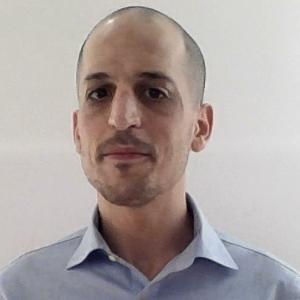
I use a combination of behavioural testing, human neuroimaging and computational modelling to study the cognitive machinery underlying humans’ internal metacognitive models of their own minds. Among the questions that keep me and my group busy are: what are the cognitive benefits of having an internal representation of one's own perception and cognition, and what happens when this representation is disturbed, biased, or not fully developed? In what way does a self-representation interact with memories of one's own actions and experiences, and with the feeling of being in control over one's actions? To what extent do people represent their own minds over and above a generic representation of minds? What is the scope of the human capacity to represent the hypothetical possibility of being someone else, and how does this capacity interact with moral decision-making and ethics?
- Post-doctoral researcher. Birkbeck, University of London (2021-2023)
- PhD in Neuroscience, UCL (2021)
- MSc in Neuroscience and Psychology, Tel Aviv University (2016)
- Adi Lautman Interdisciplinary Program for Outstanding Students, Tel Aviv University (2011-2015)
- Cognitive Science of the Self (metacognition; self-knowledge; self-representation; self-modelling; self-simulation; sense of agency; autobiographical memory)
- Philosophical Foundations of Cognitive Science
- Science and ethics
- Mazor, M., Moran, R., & Press, C. (2025). Beliefs about perception shape perceptual inference: An ideal observer model of detection. Psychological Review.
- Mazor, M., Firestone, C., & Phillips, I. (2025). Pretending not to know reveals a capacity for model-based self-simulation. Psychological Science
- Mazor, M. (2025). Inference about Absence as a Window into the Mental Self-Model. Open Mind, 9, 635-651.
- Mazor, M., Brown, S., Ciaunica, A., Demertzi, A., Fahrenfort, J., Faivre, N., ... & Lubianiker, N. (2023). The scientific study of consciousness cannot and should not be morally neutral. Perspectives on Psychological Science, 18(3), 535-543.
- Mazor, M., & Fleming, S. M. (2022). Efficient search termination without task experience. Journal of Experimental Psychology: General.
- Mazor, M., Friston, K. J., & Fleming, S. M. (2020). Distinct neural contributions to metacognition for detecting, but not discriminating visual stimuli. Elife, 9, e53900.
- DPhil, MSc, and MSci supervisor (from 2023 to present). Department of Experimental Psychology, University of Oxford.
- Cognition A (Michaelmas 2025)