
History of the College

All Souls College was founded in the 1430s by Archbishop Henry Chichele with the King, Henry VI, as nominal co-founder. It was a distinctive Oxford college with both a religious mission—praying for the dead, including the founders and war casualties—and an academic one: effectively All Souls was a graduate institution for advanced study in, principally, law and theology, training men in Holy Orders for service to Church and state rather than for secluded scholarship. Although its history over the next centuries did not always match Chichele’s ideal, it produced many notable figures, including Christopher Wren, William Blackstone, William Gladstone, Lord Curzon, and Lawrence of Arabia.
The modern college was largely shaped by late 19th- and early 20th-century reforms, especially under Sir William Anson (Warden 1881–1914), who was hailed as a ‘second founder’ for creating a community that combined academic and non-academic fellows and emphasized rigorous Prize Fellowships in law and history. Since then, All Souls has expanded its professorial and research fellowships, broadened its subjects across the humanities and into theoretical sciences, introduced Visiting Fellowships from the mid-1960s, and opened fellowships to women in 1979—changes that, while unimaginable to its original founders, still reflect their core vision of a college devoted to both pure and applied research and engagement with the wider world.
All Souls College: A Very Short History
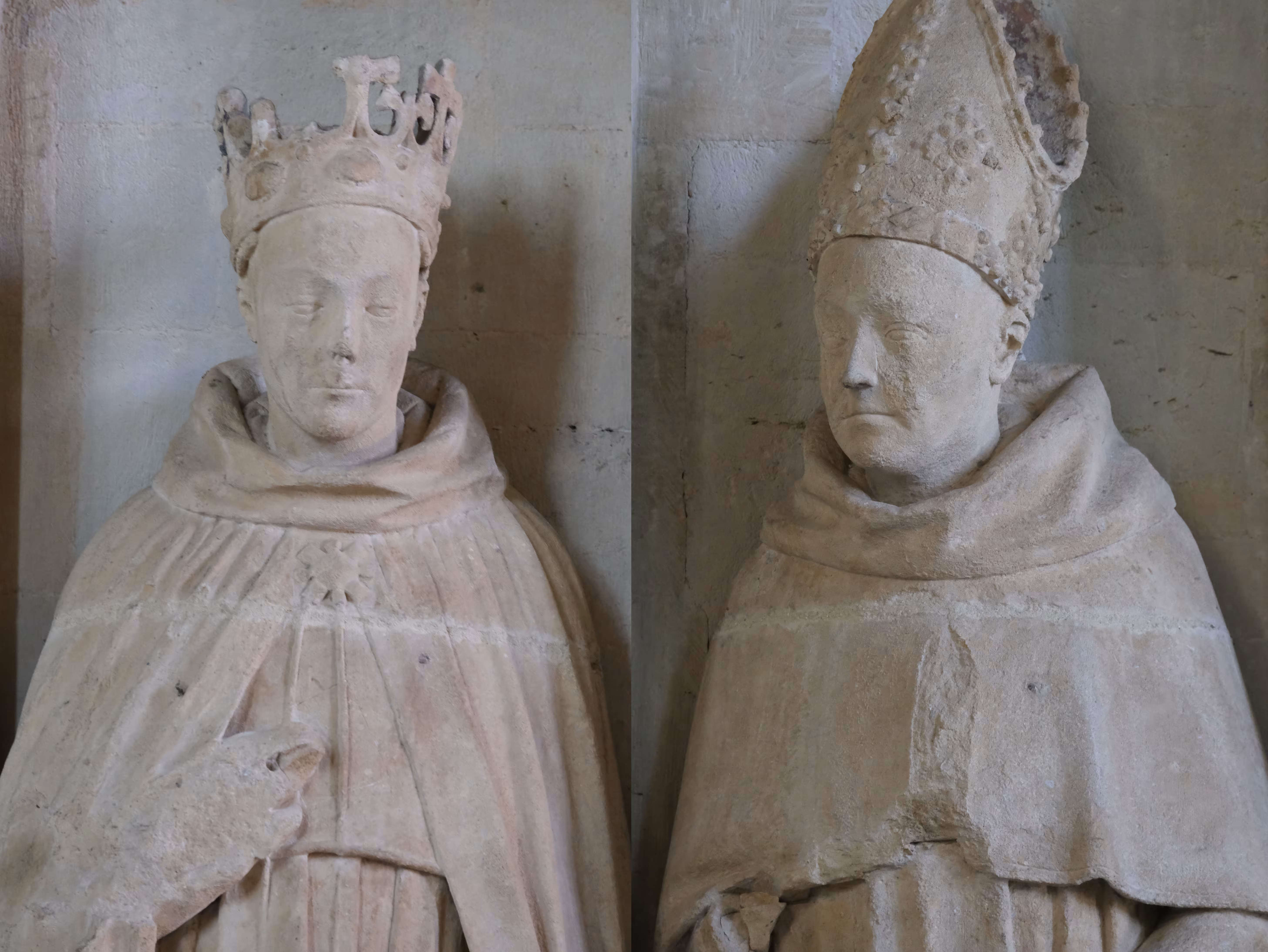
Statues of King Henry VI and Henry Chichele originally on the outer wall of the gatehouse
All Souls College was planned, built, and endowed in the 1430s and early 1440s by Henry Chichele, long-serving Archbishop of Canterbury. It received its foundation charter in 1438 from King Henry VI, who had been co-opted by the Archbishop as the College's co-founder. Chichele was in his eighties at the time and far from well. This, his third major benefaction in Oxford, stood on a prime site at the University's heart. Establishing it was among the archbishop’s final acts. He handed the statutes to the first Warden in April 1443. Eleven days later he was dead.
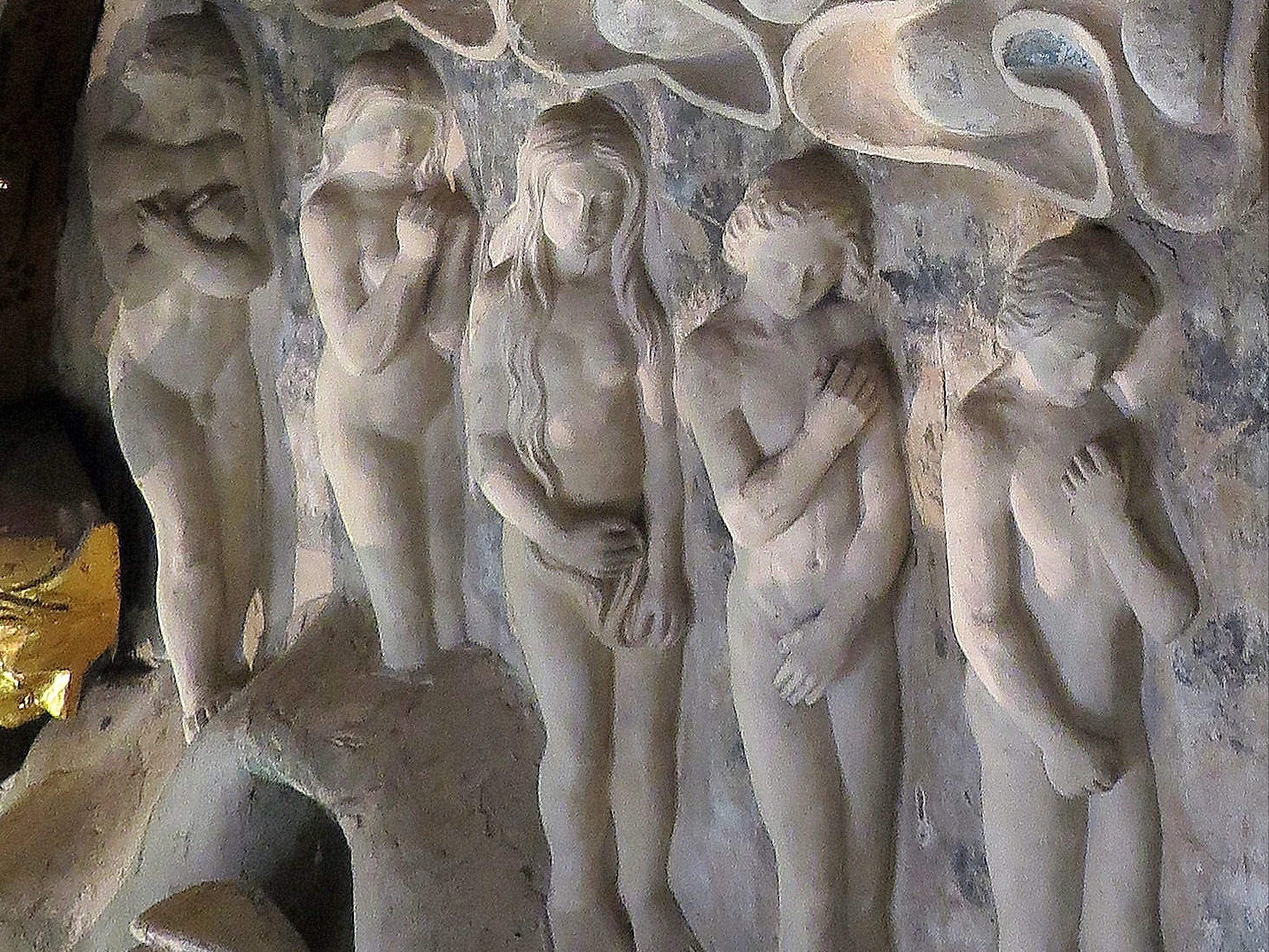
Souls coming to judgement at very top of reredos (stone wall with statuary at east end of chapel)
All Souls had two functions. The first, common to all colleges, was religious. The Warden and, originally, forty Fellows were to pray in chapel for the souls of the founders, members of the royal family, of those who had fallen in the long wars with France – and of 'all the faithful departed'. That usual add-on to any list of who should be prayed for was the name Chichele stipulated for his foundation right from the start: not his own name, not the Virgin Mary, not a saint, but ‘all souls’.
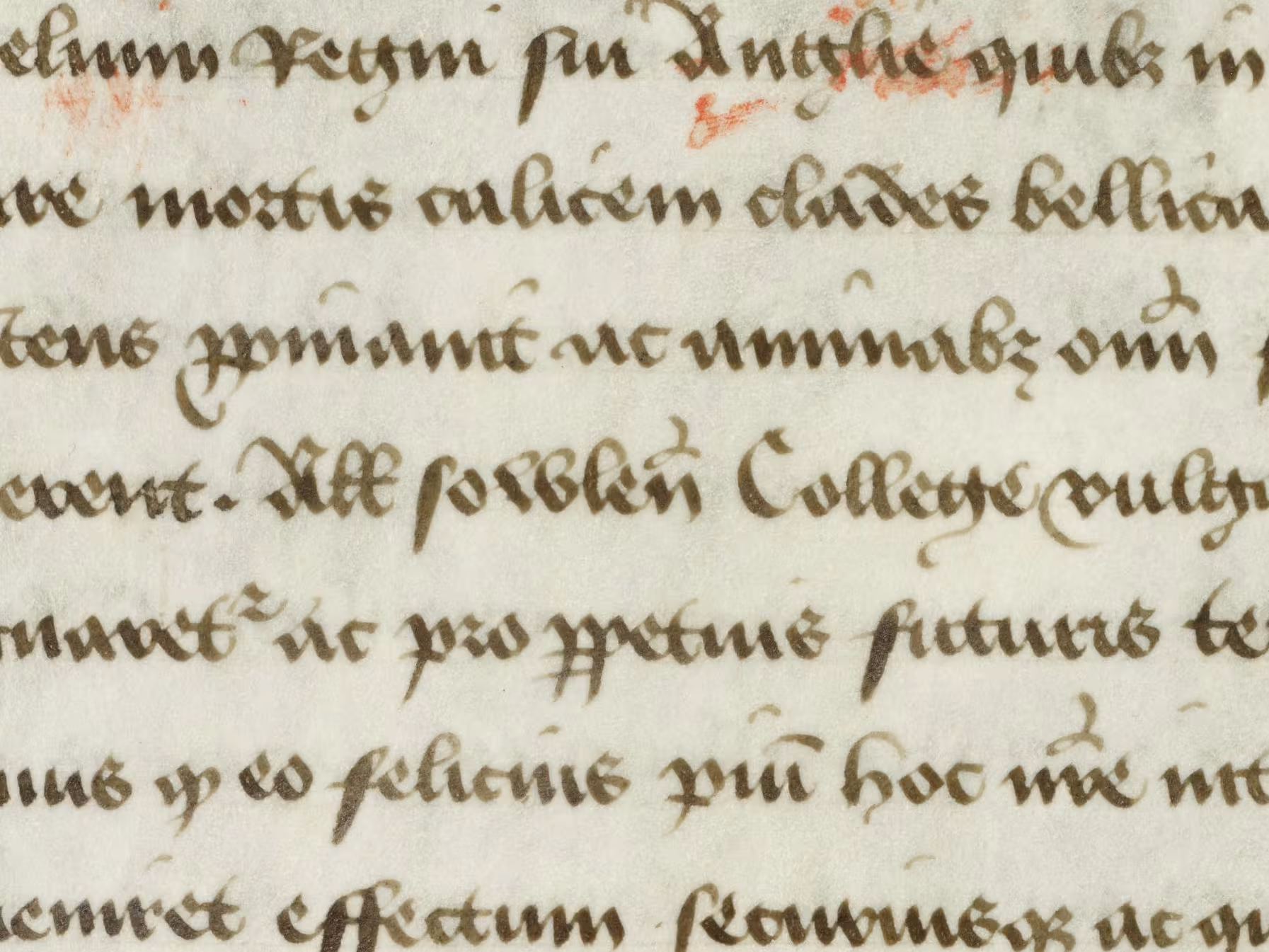
Page from original Warden’s copy of the statutes showing name of the college in English
Along with prayer for the dead, the function of the College was academic. That was no surprise. Yet then as now All Souls was distinctive among colleges. Chichele envisaged the medieval equivalent of a purely graduate college, an institute of advanced study of a very practical kind. We could think of it as a school of government.
With minor exceptions, the College has never taken in undergraduates. A unique provision in the statues was that, before they could be admitted, new Fellows were previously to have studied somewhere else in the University for at least three years. Most would already have a BA. Once admitted, they were to study or teach for the Master of Arts degree and the higher degrees of theology, law (civil and 'canon', or Church, law), and medicine – but especially theology and law. The Fellows, nearly all in Holy Orders, had to prepare themselves, not for life in the ivory tower, but for service to Church and State.
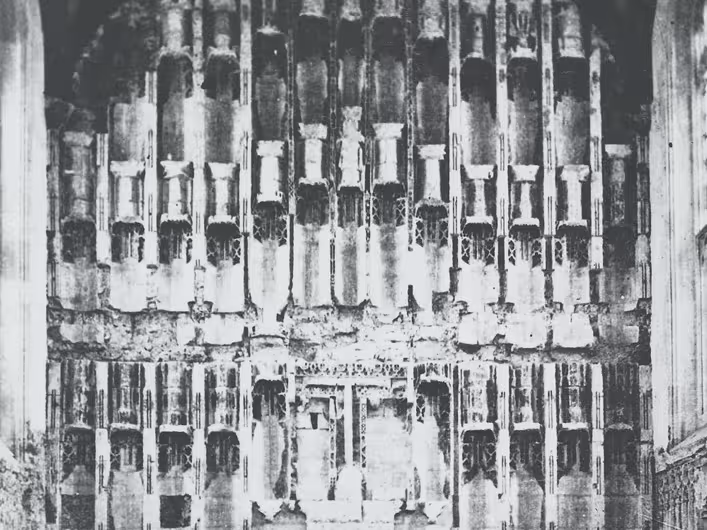
Photograph of east end of chapel, 1872, showing what the Victorians uncovered and giving some idea of the effect when original statues were removed in 1549
The Reformation brought about by Henry VIII from the 1530s onwards and the religious changes of the middle decades of the sixteenth century left deep marks on the College.
John Warner, the Regius Professor of ‘Physic’ (Medicine) and Warden twice (1536 to 1556 and again 1559 to 1565) showed great flexibility in retaining office under Henry VIII, Edward VI, Mary I, and Elizabeth I. But some Fellows were deprived of their fellowships under both Protestant and Catholic regimes. The chapel lost its altars, the statues on its great west wall, its organ, and some of its vestments and ornaments. Changes in intellectual fashion as well as religion, and the growth of the trade in printed books, caused many manuscripts to be withdrawn from the College library.
In 1549 a commission proposed that the College should become devoted exclusively to legal studies. That did not come about, but the College's reputation as a training ground for lawyers, already established in the fifteenth century, was greatly strengthened in this period.
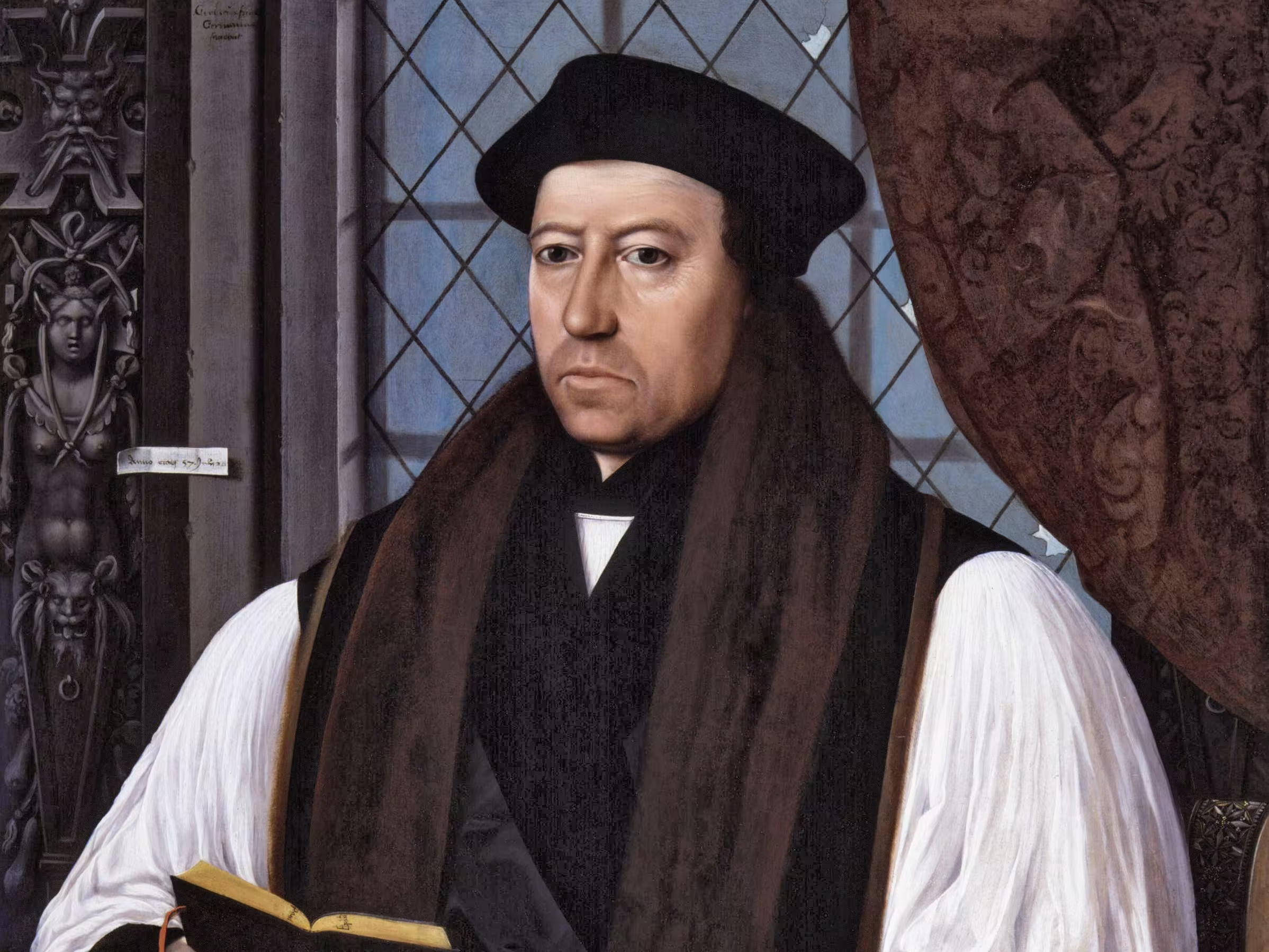
Portrait of Thomas Cranmer by Gerlach Flicke
The post-Reformation years were a time of indiscipline within the College. Archbishop Cranmer's visitation of 1541 had revealed that non-residence, failure to take degrees and enter holy orders, extravagance in dress, and brawling and drunkenness were not unknown among the Fellows. It also – more seriously – revealed that the practice of ‘corrupt resignation’ was rife. This was the acceptance of payment for resigning your fellowship and rigging the consequent election for your intended successor. The College clearly needed a strong guiding hand.
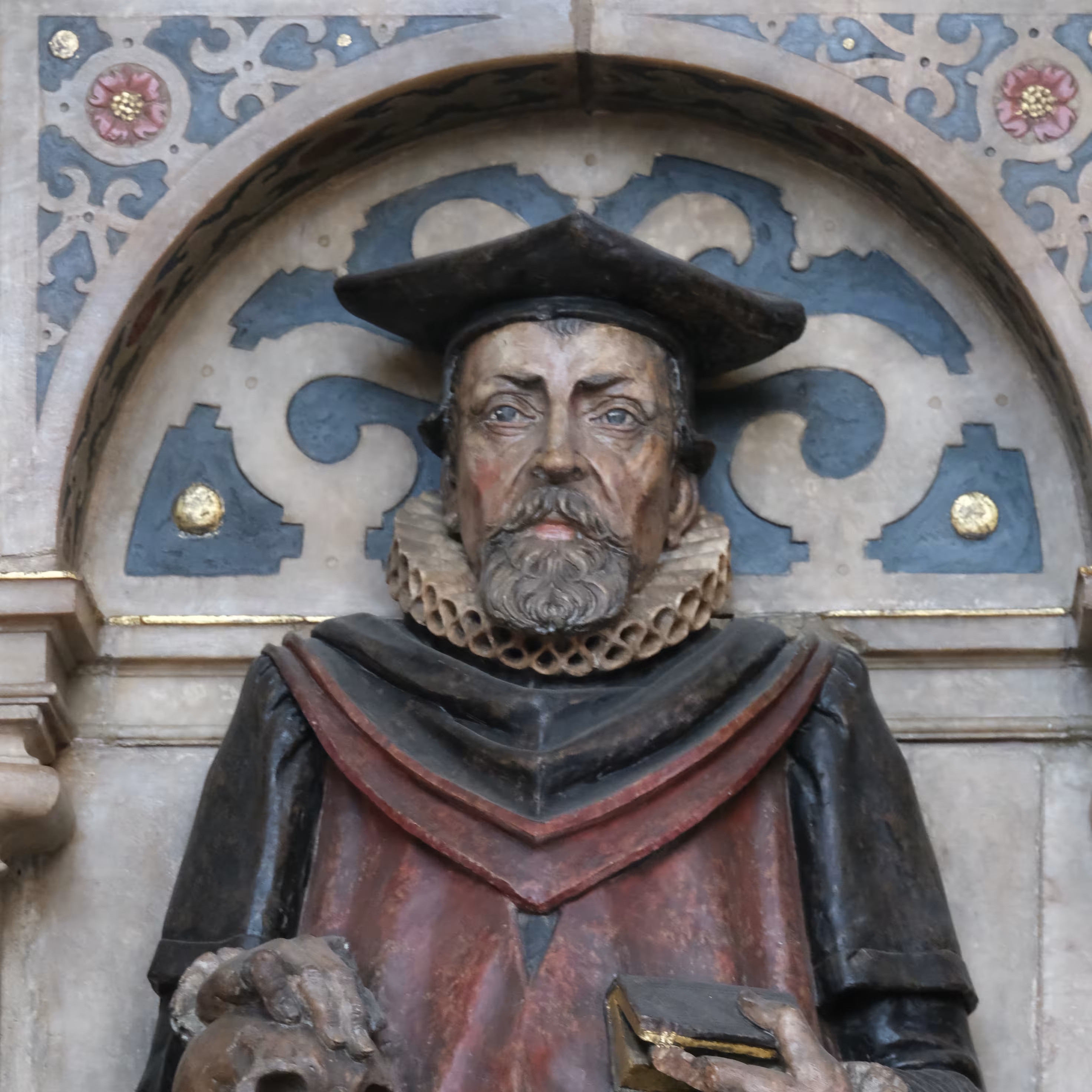
Monument to Warden Hovenden in antechapel
Robert Hovenden was elected Warden in 1571 at the age of twenty-seven. He was the youngest Warden ever and went on to serve for longer than any other before or since, dying in office forty-three years later. During his tenure he showed himself to be a notable disciplinarian and a man jealous of the College's property. He stoutly defended the College's interests, even against Queen Elizabeth I. He commissioned over 100 maps of the College's estates. And he set its archive in order. He acquired land to the east of the High Street front of the College and built on part of it a twin-gabled study. But his most notable addition to the College is the fine heraldic ceiling in the Old Library.
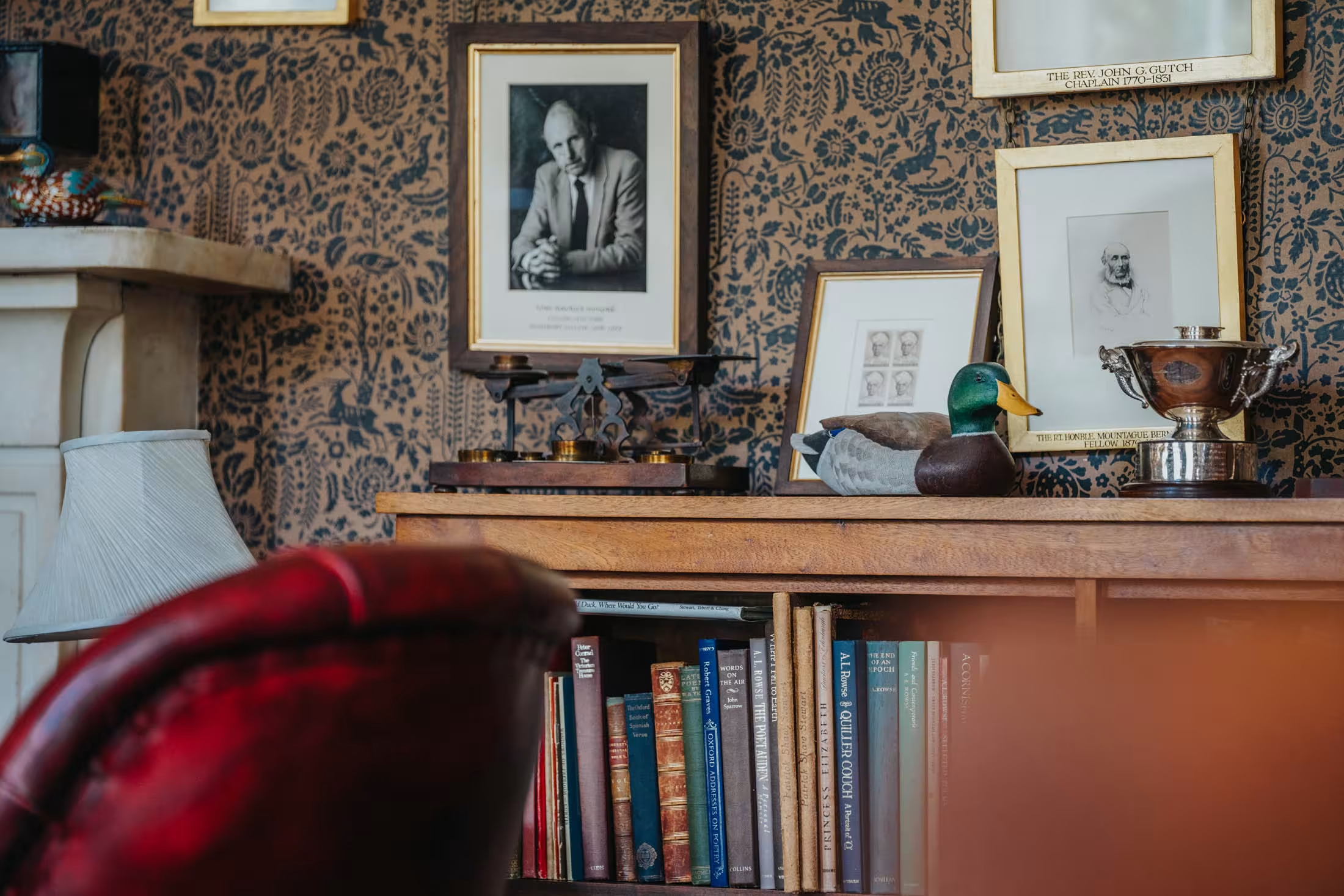
From the time of one of Hovenden's successors we have, in 1633, an early reference to what would become the College totem - the mallard - and to the ceremonies connected with it. These included a procession around the College by the Fellows, which could get out of hand and lead to damage to the fabric. Mallard processions led by the ‘Lord Mallard’ are known to have taken place at the beginning of each new century starting in 1701. The ‘Mallard Song’ is still sung at College gaudies.
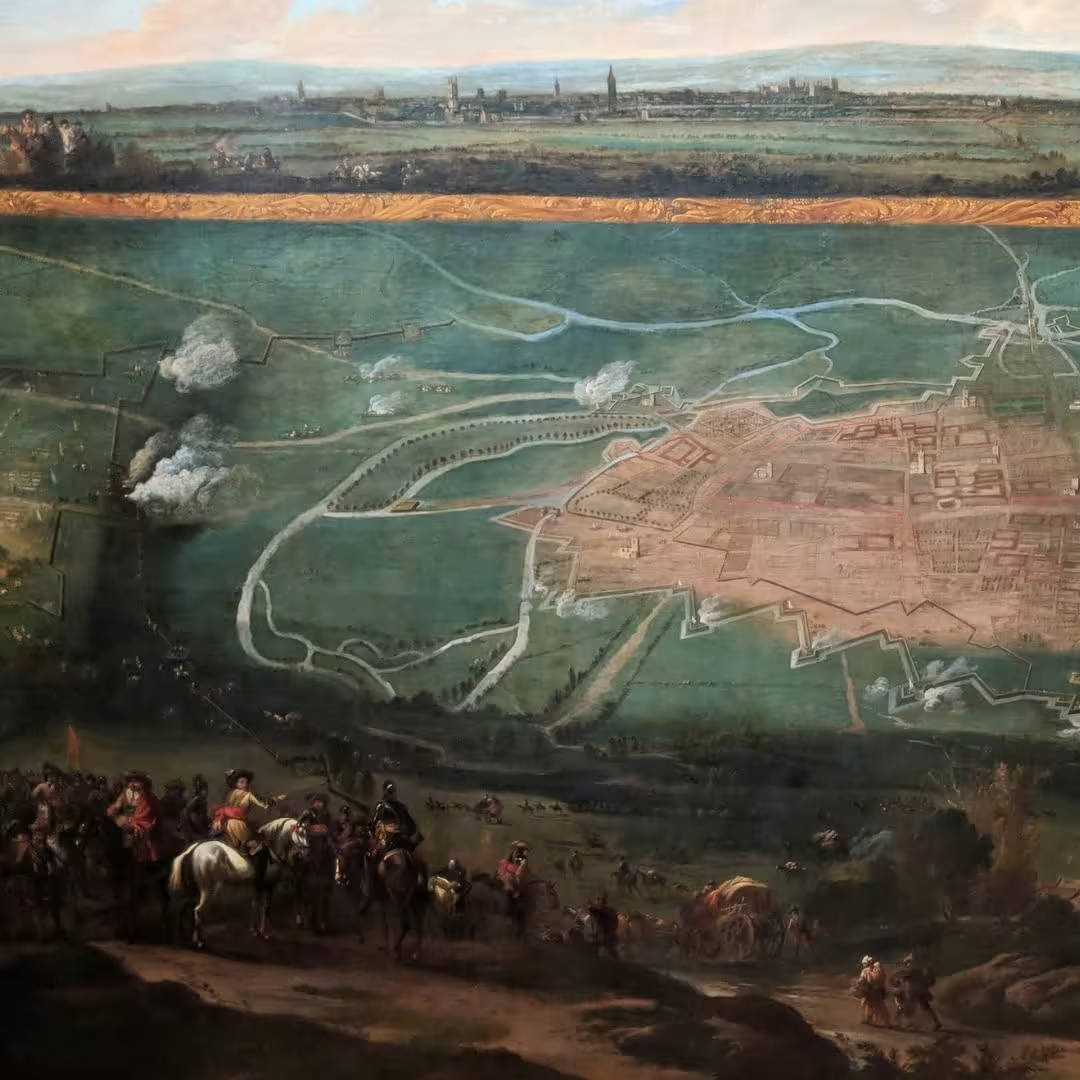
In the upheavals of the seventeenth century All Souls was a strongly Royalist College. Nearly all the Fellows contributed generously to the Royalist cause in the Civil Wars and sacrificed their fellowships rather than swear allegiance to Parliament. The College was second only to Magdalen in the amount of plate that it supplied to the Royal Mint. Small wonder that Warden Gilbert Sheldon was forcibly removed from the lodgings in April 1648 and that only seven of the forty Fellows avoided the loss of their fellowships. Between 1648 and 1652 forty-three men were intruded into fellowships by Cromwell’s Commissioners. Most of the intruders were academically undistinguished, but they included Thomas Sydenham – one of several medical and scientific Fellows of the college in the second half of the century.
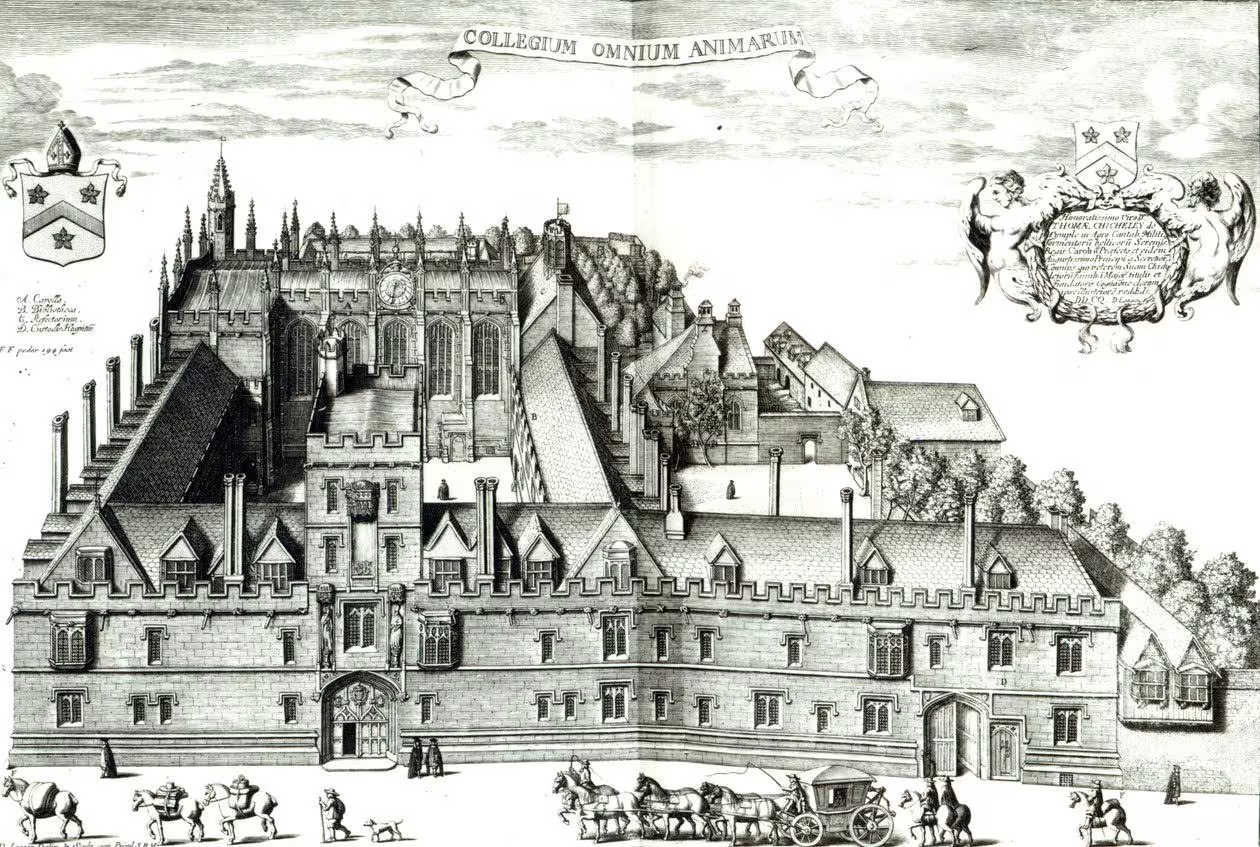
David Loggan’s All Souls College, Oxford, 1675, showing the original position of Wren’s sundial
In 1653, when regular elections resumed, the great Christopher Wren joined All Souls. He held College office and it was almost certainly he who in 1658 designed the fine sundial which surmounted the south wall of the chapel until its removal to the Great Quadrangle in 1877.
The Restoration of King Charles II in May 1660 brought more change. All but one of the intruded Fellows were seen off and Sheldon was reinstated as Warden. The chapel showed the effects of the new mood. A massive Last Judgement was painted over the east end of the chapel.
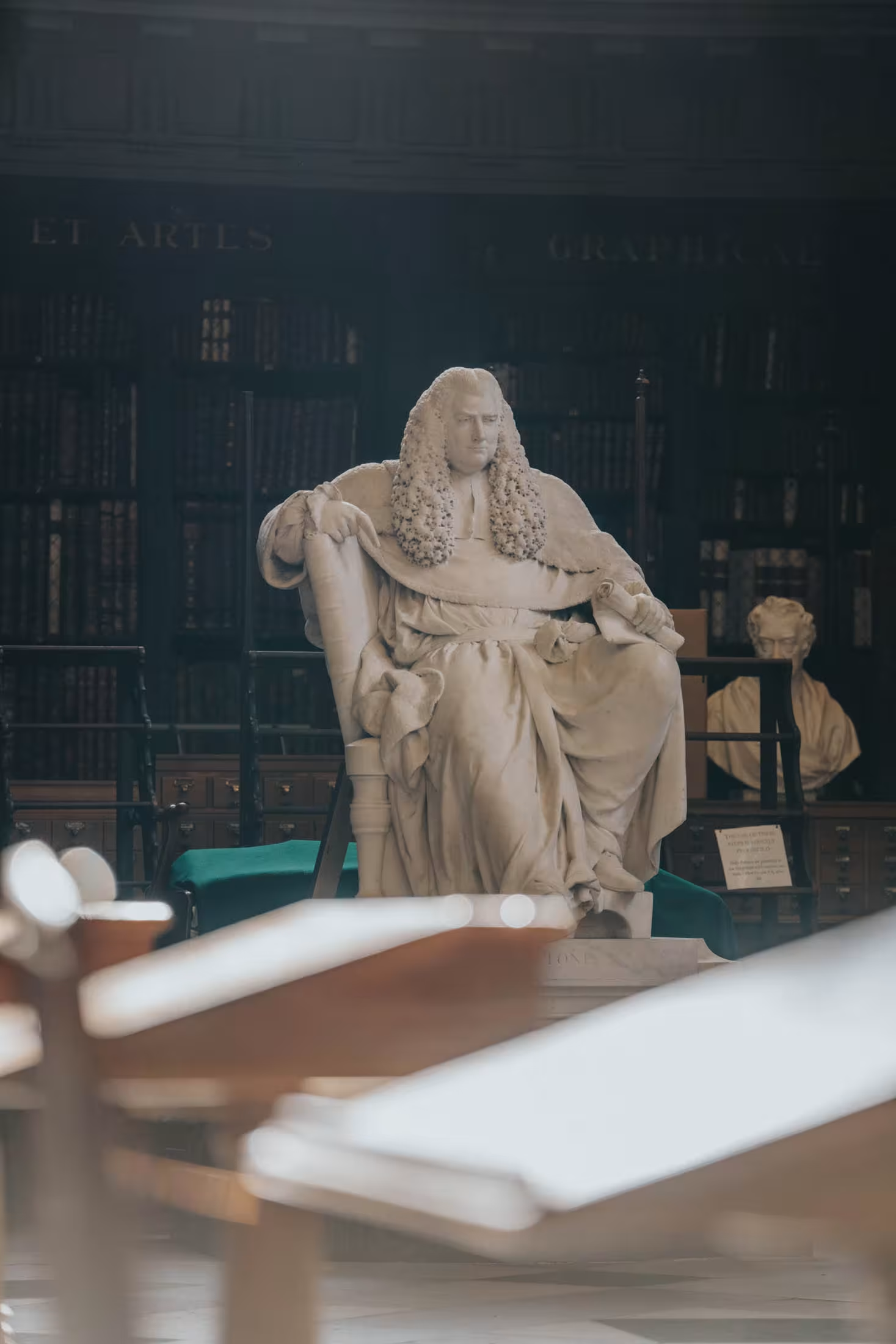
Caption statue of Sir William Blackstone by John Bacon in College Library
The eighteenth was not the College’s finest century. For the first quarter of it, Warden Bernard Gardiner fought an ultimately unsuccessful campaign against many of the fellows. He was trying to enforce the statutes relating to non-residence and the taking of holy orders. That was not the only problem.
Back in 1681 Warden Jeames, supported by the Visitor, Archbishop Sancroft, had at last succeeded in stamping out corrupt resignations, and for a time the quality of the fellowship noticeably improved when men such as George Clarke joined the College. But the victory opened the way to another abuse. During the second half of the century graduates claiming kinship with the founder as grounds for election (as allowed in the original statutes but hardly used in the centuries since) began to swamp the College.
Still, there were exceptions to the poor intellectual standards. Eighteenth-century All Souls can claim the poet Edward Young (Fellow, 1708), two Lord Chancellors, nine bishops and, above all, William Blackstone (Fellow 1743 to 1762), the first man to lecture on the Common Law at Oxford (in 1753).
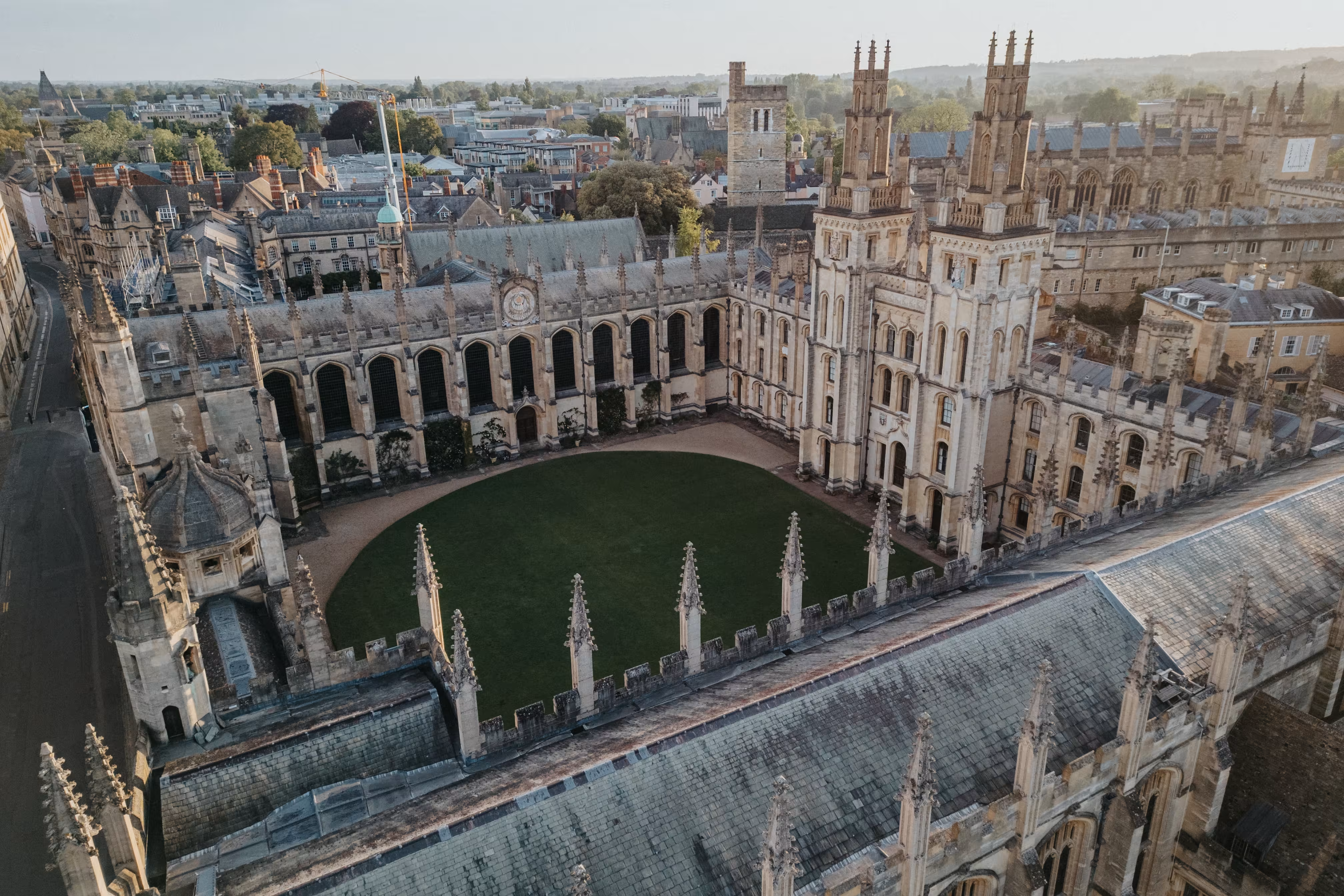
The Great Quad, All Souls College
In one area the eighteenth-century College scored a brilliant success – the replanning of its buildings. The initiative came from Dr George Clarke, politician, lawyer, virtuoso, and capable amateur architect. In about 1705 Clarke planned a complete rebuilding of the College. Schemes were submitted by several architects. But all plans were changed when the College received, out of the blue, news in 1710 that former Felow Christopher Codrington had died in Barbados, leaving £10,000 to the College to build and endow a library – together with his own collection of some 12,000 volumes. For the College’s response today to this highly problematic legacy see here.
By 1715 Nicholas Hawksmoor had submitted a design which placed a great library where a ‘dormitory’ had been planned. By mid-century the College had a magnificent north quadrangle. Within a few more years it also had a fully refurbished chapel. An often quarrelsome and intellectually unambitious Fellowship had shown itself to be a great patron of art and architecture.
The year 1857 marked the end of the ‘old regime’ in All Souls. It was the year of the Ordinance which followed from the activities of the 1850 Royal Commission of enquiry into the University. This new dispensation swept away the rights of ‘founder's kin’ and also the obligation on Fellows to take holy orders. Candidature for fellowships became restricted to those who had either gained a First Class degree in Oxford or had won a University prize.
The new, far more severe, Fellowship examination was to be on subjects in the new School of Jurisprudence and Modern History. Ten Fellowships were suppressed to fund Chichele Professorships in International Law and Diplomacy (1859) and in Modern History (1862).
It became possible for the College to elect to Fellowships, without examination, professors or other members of the University 'of eminence', and also Honorary Fellows (William Gladstone was one of the first to be so elected in 1858). The marriage prohibition did not apply to the non-examination fellows, and in 1858 Max Müller (Professor of Modern European Languages) became the first married Fellow of All Souls.
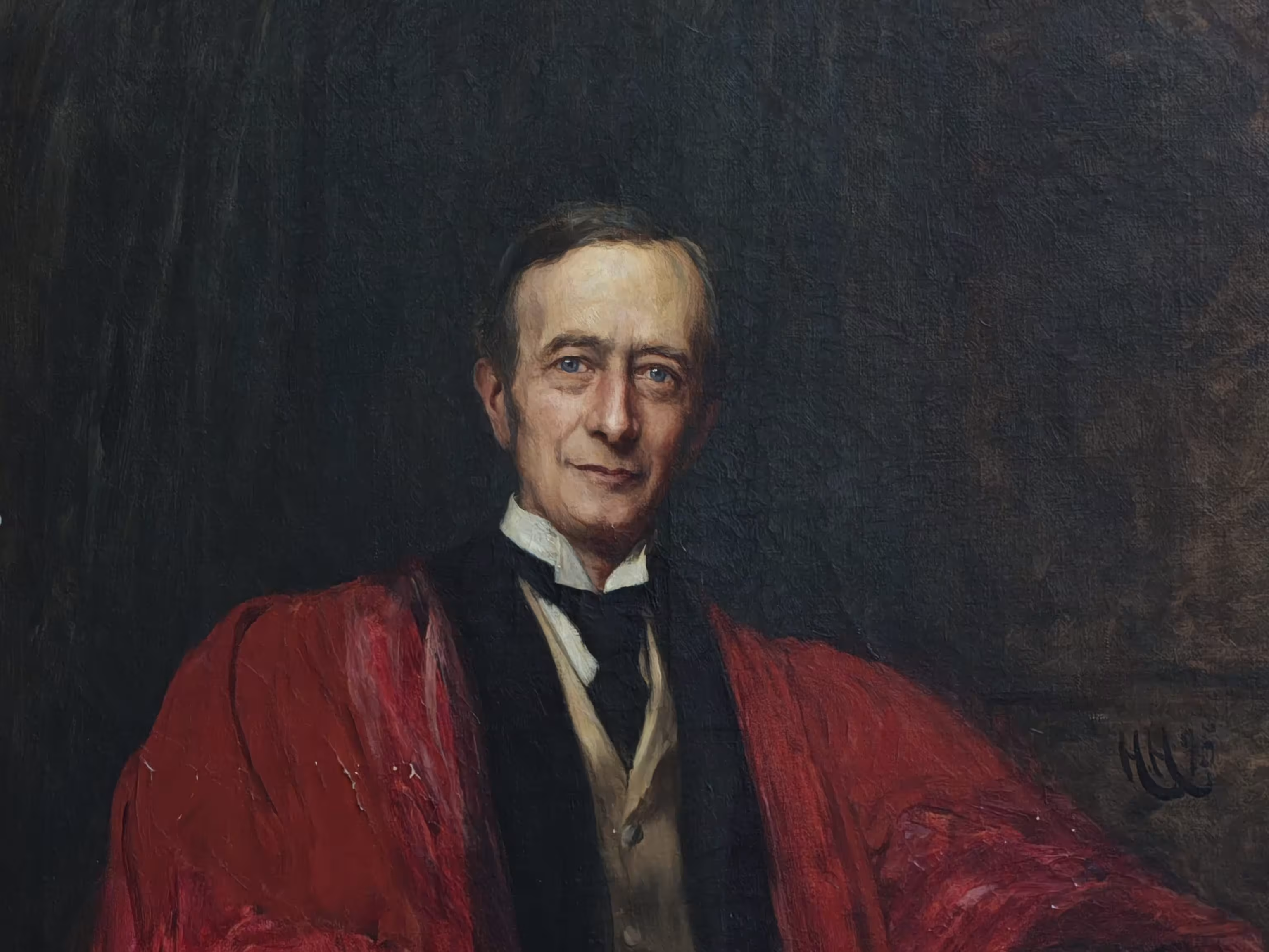
Portrait of Sir William Anson by Hubert von Herkomer
One Fellow especially active in reform was Sir William Anson (1843-1914), who was to become the College's first non-clerical Warden in 1881. He was an outstanding constitutional lawyer and an active Liberal politician.
Under his direction the College developed along two lines: the advancement of learning by research and teaching, and the production of 'men of the world', active in public life but with high academic qualifications. He envisaged some of the latter as those who, while serving the state as lawyers, politicians, and administrators, might also be invited to strengthen the governing body of the College as non-stipendiary (‘Distinguished’) or near-non-stipendiary (‘Fifty-pound’) Fellows, categories still in use today.
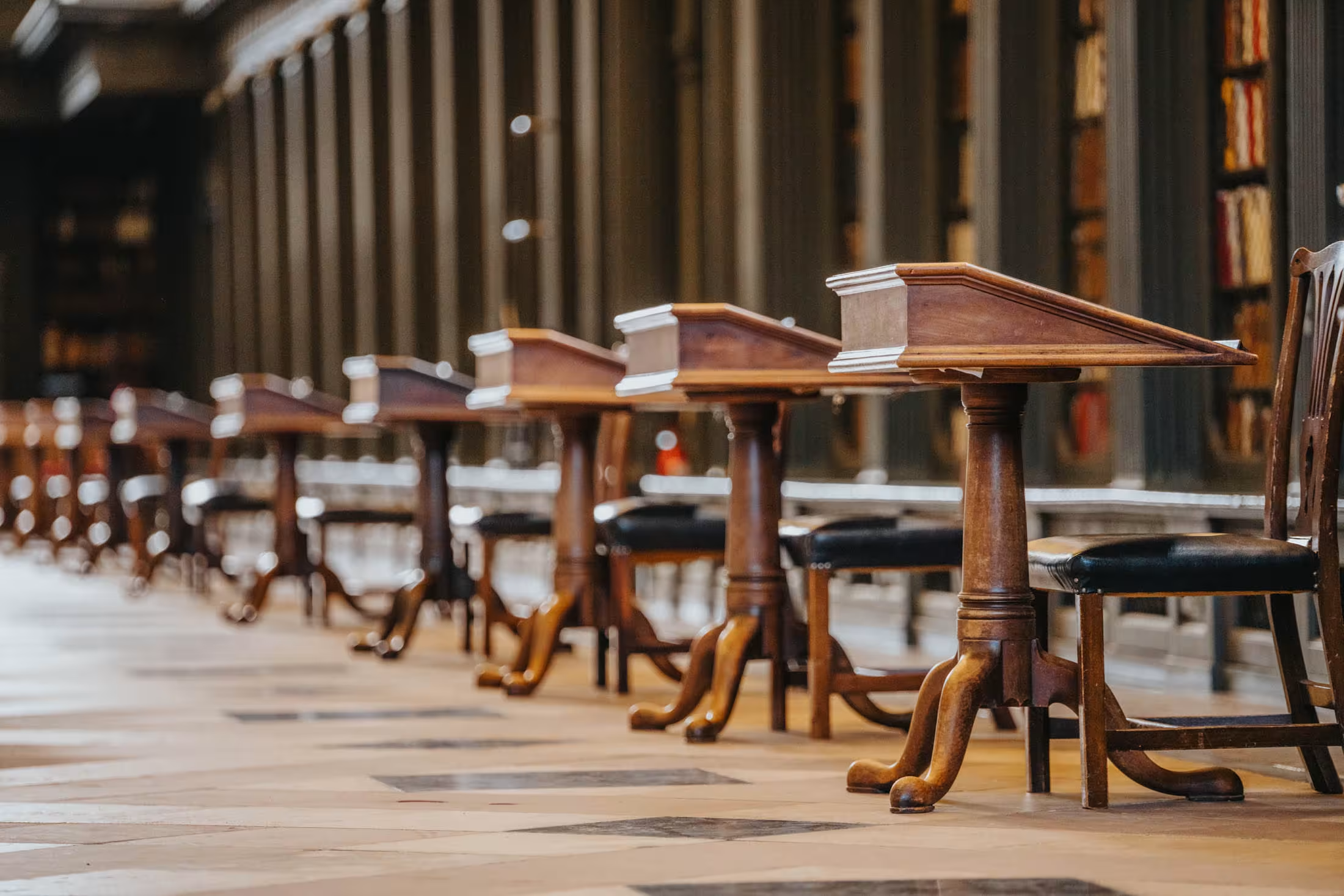
Law Library, All Souls College
The new College statutes of 1882 reflected Anson's views. They ensured that future examination Fellowships should terminate after seven years. The marriage restriction was done away.
In future there were to be twenty-one seven-year examination (or Prize) Fellowships (two-thirds of them specifically connected with historical and legal studies), up to seven Research Fellowships, and ten ‘Fifty-pound’ Fellowships. There were to be three ‘Distinguished’ Fellowships and the three existing Professorial Fellows in international law, history, and political economy were joined by the holders of the Regius Chair of Civil Law and the Vinerian Chair of English Law. The College provided financial support for all five chairs and for new Readerships in Indian Law and Roman Law.
The template of the Modern College is recognisable in Anson’s All Souls.
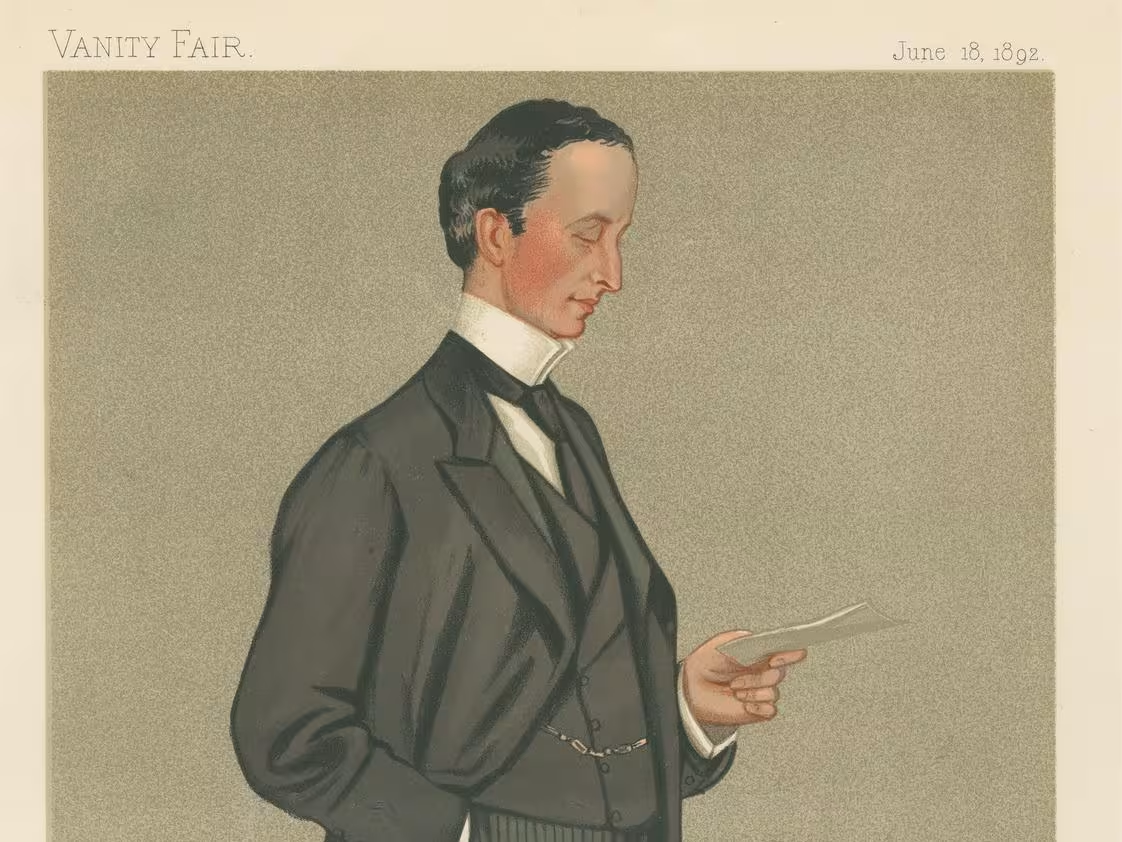
Spy cartoon of George Curzon
Some colleges have had links with the British empire that can be uncovered only by persistent research. In All Souls the connection is obvious, in South Africa and still more in India. 1883 saw the election to a fellowship by examination of George Curzon, traveller, author, politician, and, in 1899, Viceroy of India. Curzon was the first of three fellows to hold that post, the others being Lords Chelmsford and Halifax.
The All Souls-India political link runs from Curzon’s time through 1947, when former fellow Cyril Radcliffe chaired the calamitous boundary commission that partitioned India and Pakistan, to 1952, when Sarvepalli Radhakrishnan left his All Souls professorship to become the second president of India.
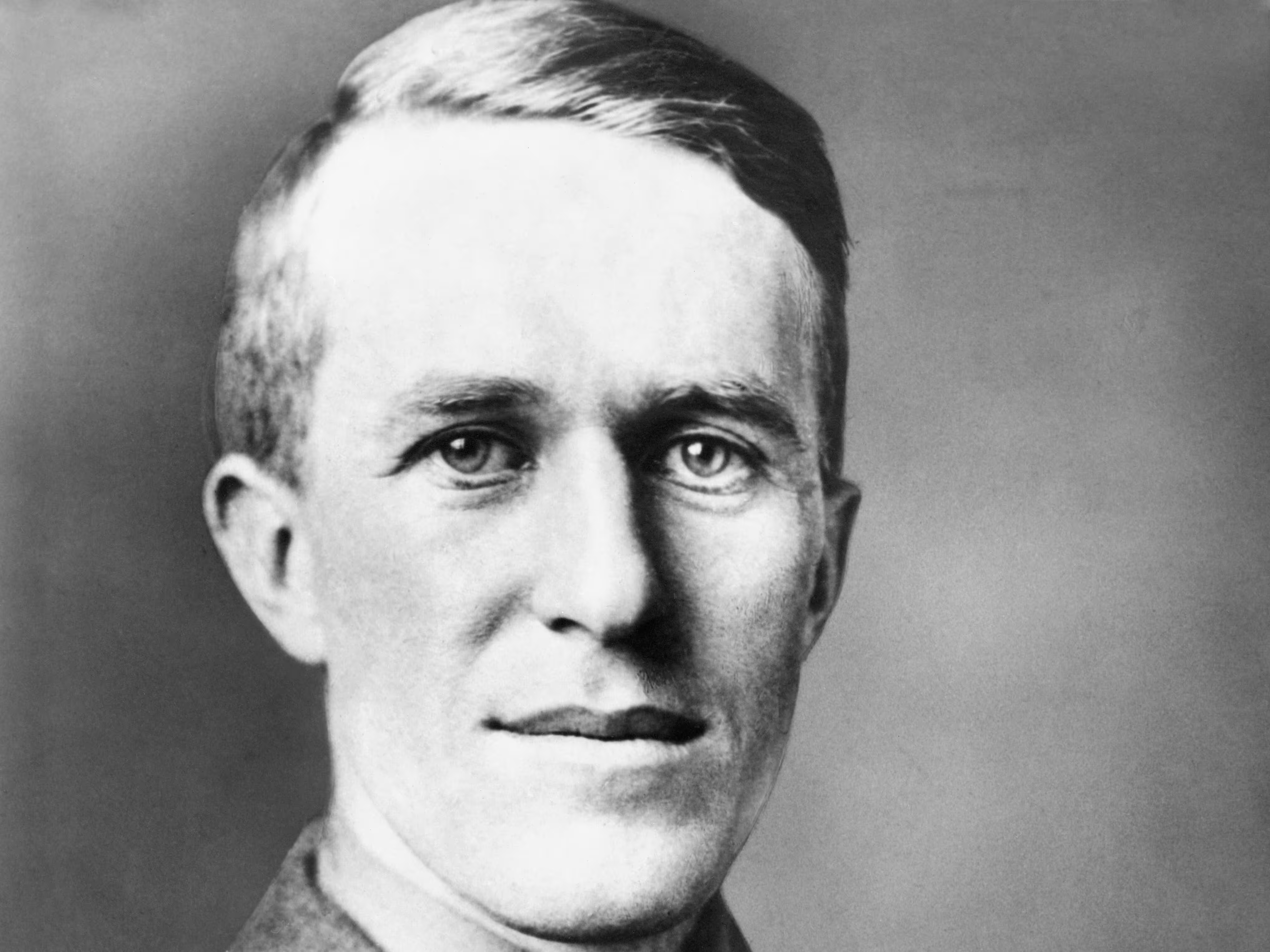
T. E. Lawrence (of Arabia)
The modern College established itself as a centre for research by fellows operating at the highest international level. This did not of course happen overnight. There had been a few Research and Professorial Fellows ‘of eminence’ in the nineteenth century, elected without sitting the traditional exam. But a University Commission established in 1919 recommended in its report that All Souls should elect more Research Fellows as well as playing a greater part in the supervision of graduate students.
In the twentieth century the first of these Research Fellows, strikingly, was Lawrence of Arabia, who used the time of his fellowship to work on The Seven Pillars of Wisdom. In fits and starts, but overall with increasing distinction, the list runs through the century, to (for example) the election in 1991, to what had then come to be called a Senior Research Fellowship, of the classicist M. L. West, OM, widely regarded as the greatest Greek scholar in the world.
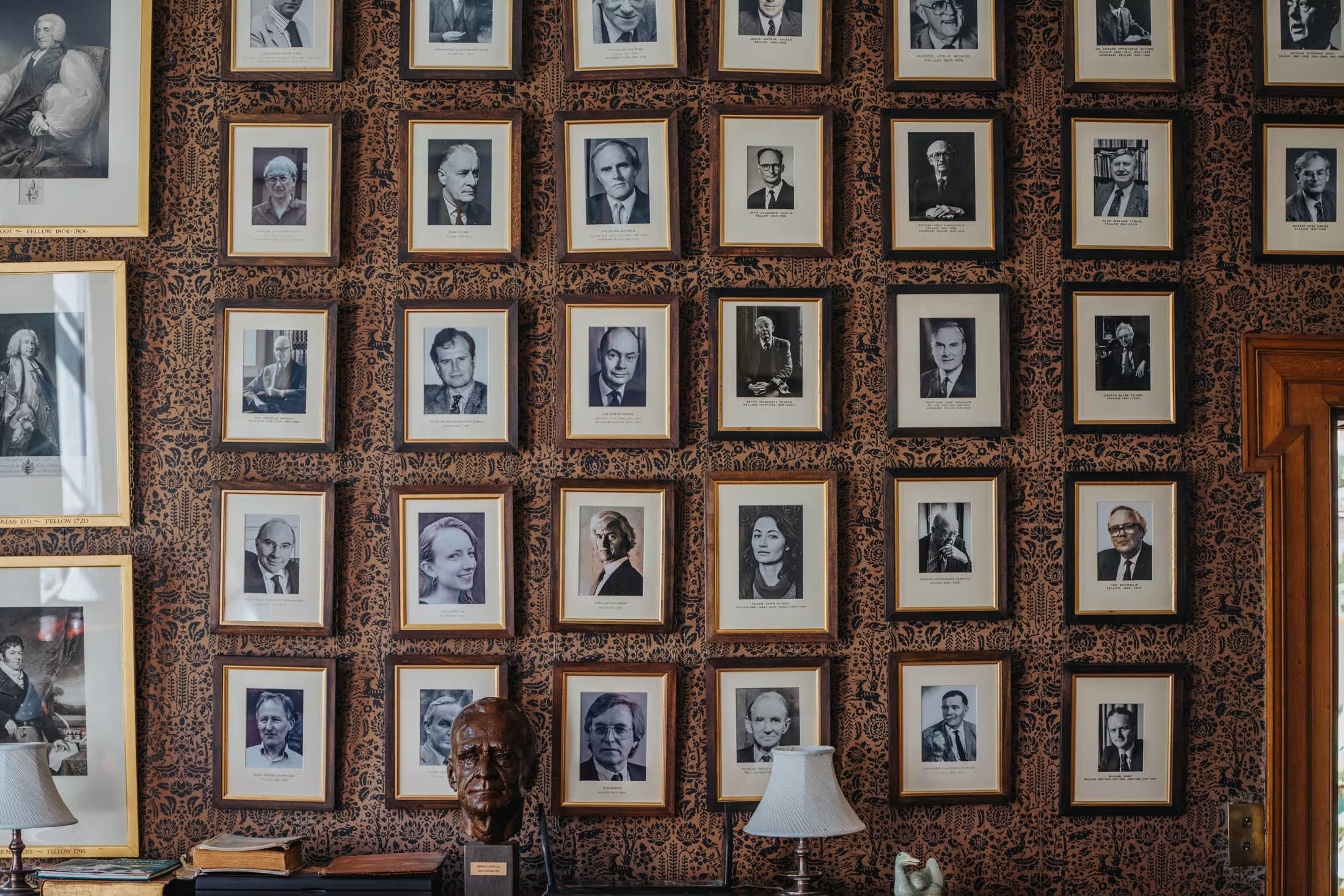
Since the closing decades of the nineteenth century, All Souls has been a college of professors as well as Research Fellows, holders of named, endowed chairs, appointed by the University. The creation of Chichele chairs, named after the founder, Archbishop Henry Chichele, had been one of the first fruits of the mid-nineteenth century.
By the 1960s there were fourteen Professorial Fellows of All Souls. Most of them were in the fields of law, history, and political economy, but other disciplines represented included social anthropology, ecological genetics, Eastern religions and French literature. Today there are sixteen.
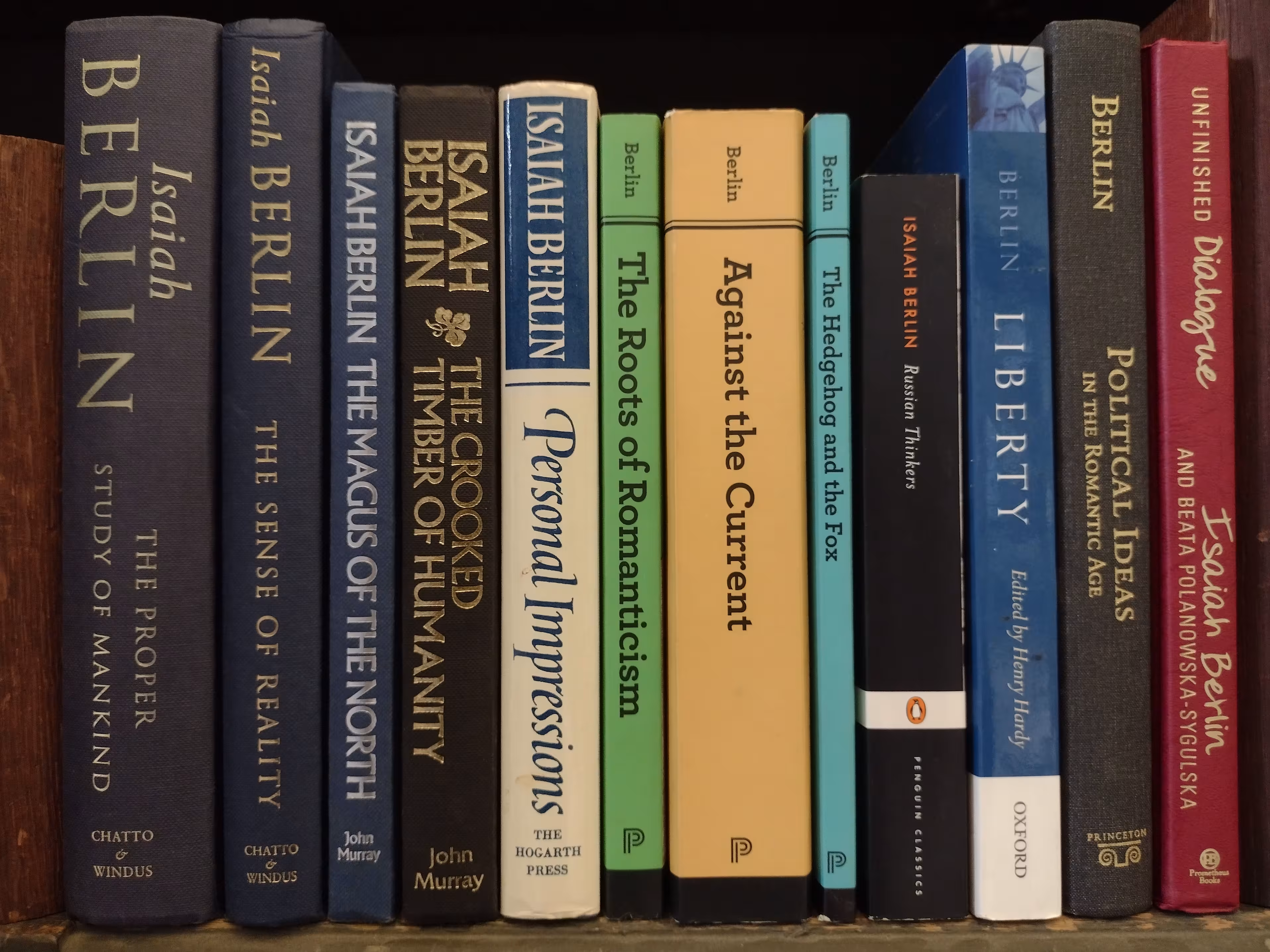
A Prize Fellow (Fellow by Examination) could and still can choose to pursue a non-academic career, typically in London (law, politics, journalism and the like). After the seven-year term of such a fellowship it was and still is possible to come back into college on a Fellowship with only a nominal stipend (a ‘Fifty-pound’ Fellowship) and attend at weekends, working outside Oxford during the week.
This was the way in which the College has maintained its connection with the professions and public affairs. Not just connections but possible influence too. For example, two Fellows, G. E. Buckle (elected 1877) and Geoffrey Dawson (1898) became almost successive editors of The Times from 1884 to 1941 (there was a gap only from 1919 to 1923). Or consider the unusual triple election of 1932: Richard Wilberforce, future eminent judge, Patrick Reilly, future British ambassador in Paris; and Isaiah Berlin, philosopher and public intellectual. The College’s role in public life has also led to (unfounded) accusations that it was for example a nursery of the policy of ‘appeasement’ to Hitler and the Nazis in the later 1930s.
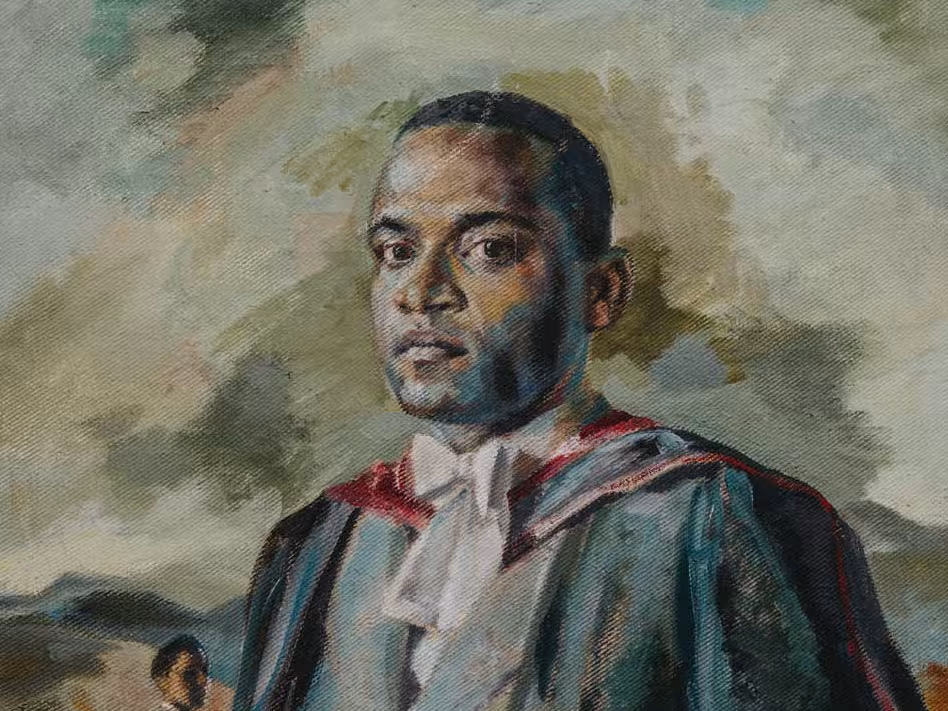
Portrait of Hugh Springer by Hector Whistler
The 1960s saw the beginnings of a major change in the change in the character of the college. In 1963 after much discussion All Souls had by a majority decided that its future lay in accepting (non-fellow) graduate students – but then as the details were thrashed out a new solution was proposed and adopted: the development of a large-scale scheme for Visiting Fellows from Britain and overseas who were to be invited to spend up to a year at All Souls pursuing their researches.
This change of heart, which was to result over the next 60 years in over 700 distinguished scholars from countries across the globe joining the College for up to a year. One of the first Visitors was Hugh Springer, future Governor General and official ‘national hero’ of Barbados.
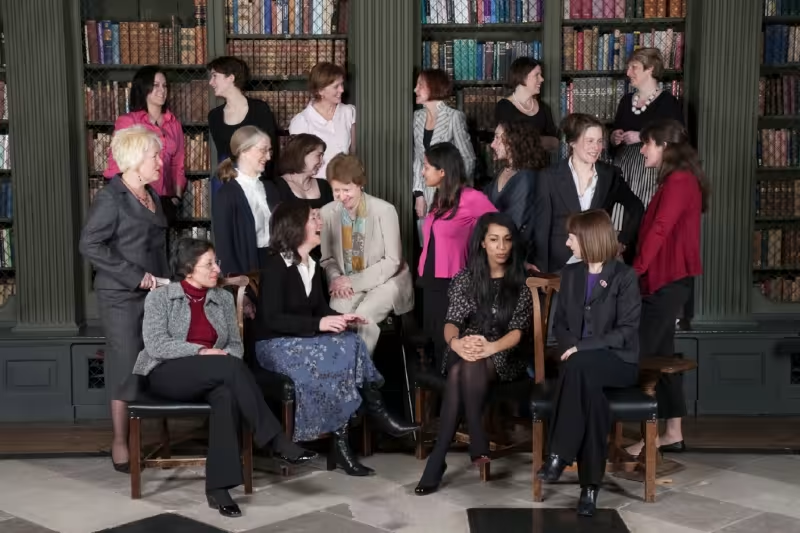
A major development of the later twentieth century was the admission of women to the fellowship. Women had been associated with the College from its very beginning but as servants only. In his first year as the new Warden of All Souls, 1977, Patrick Neill sent the Fellows a memorandum entitled ‘Statute I of All Souls College Statutes’. It concerned the second sentence of the statute: ‘No woman shall become a member of the College’. By 1978 all but one of the formerly all-male colleges had changed their statutes to make women eligible for election. A change of statute required a two-thirds majority, and this was achieved and indeed exceeded at a special meeting of the College in February 1979.
The first woman elected, in 1981, not by exam but on the basis of chapters of a doctoral thesis, was the philosopher, late Susan Hurley (1954-2007).

Visiting the College
Visitors are welcome to explore selected public areas of All Souls College at regular times throughout the week. These include the Front and Great Quadrangles and the Chapel, with some closures and access arrangements applying.
Find out more