'sizes': '(min-width:100px) 384px, (min-width:384px) 640w, (min-width:640px) 750px, (min-width:750px) 828px, (min-width:828px) 1080px, (min-width:1080px) 1200px, (min-width:1200px) 1920px, (min-width:1920px) 2048px, 3840px',
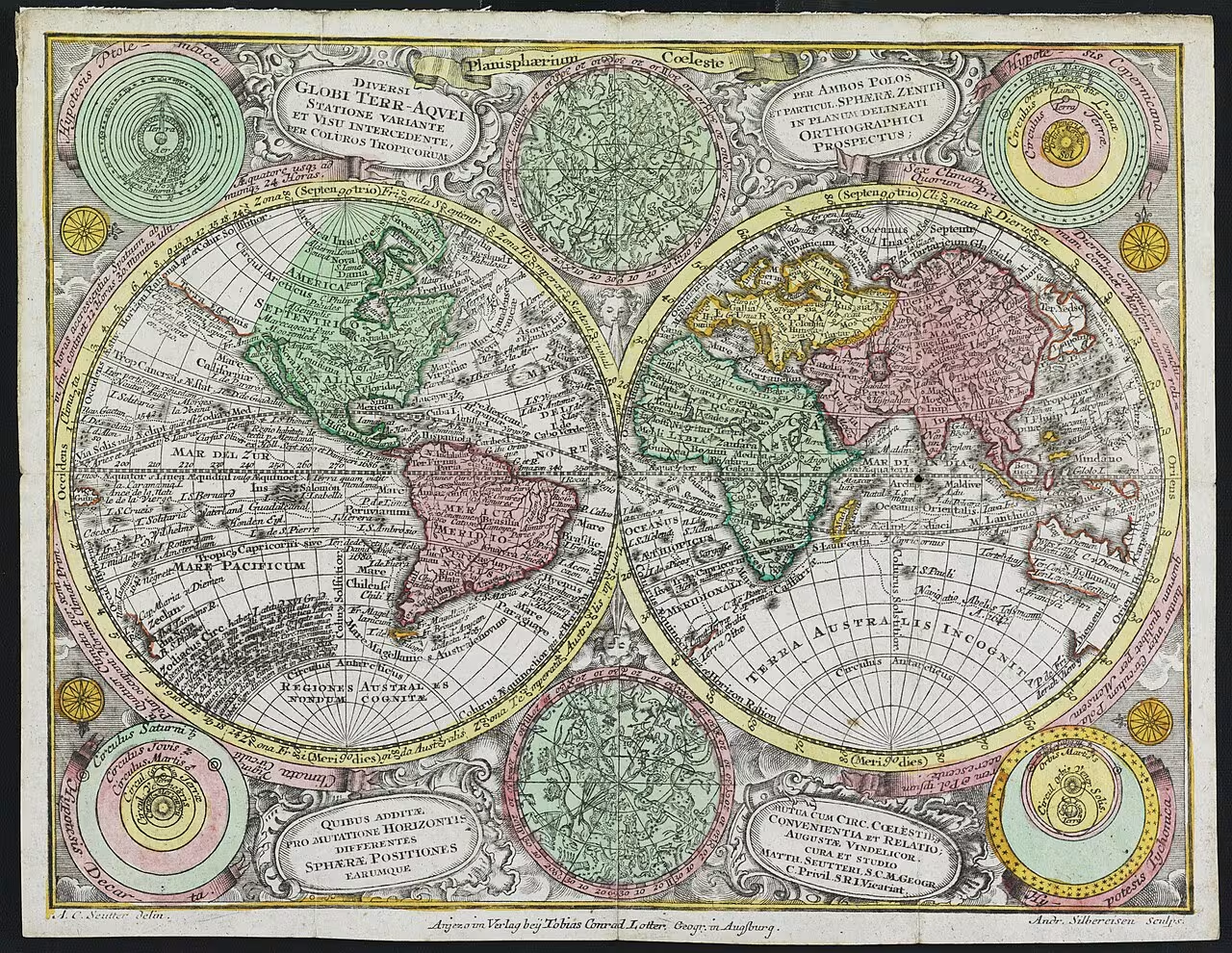
Global Intellectual History Seminar | Seminar 1: Consider the Mantis: IKaggen, Means of Subsistence, and Misunderstanding Across the Cape Colonial Frontier
Location:
Hovenden Room, All Souls College
Audience:
University of Oxford members
General Public
Date / Time:
-
Speaker: Professor Gianamar Gionvannetti-Singh
This talk proposes that the Mantis, construed in drastically different ways by European settlers and southern Africa’s indigenous populations, became an important medium through which different groups across the Cape’s colonial frontier—San hunter-gatherers, Khoekhoe herders, and settler agriculturalists—made sense of each other’s ways of life. To the San, the mantis was a prominent avatar of a powerful shapeshifting trickster deity called, among other names, |Kaggen. The San associated the Mantis with the procurement and consumption of meat, as he was viewed as the Lord of the Animals, responsible for protecting his creatures from excessive or wasteful appetites. Consequently, placating |Kaggen was an important for ensuring food security. Early modern Europeans, by contrast, classified mantises within the wider category oflocustae, which also included locusts, grasshoppers, cicadas, and crickets. These creatures were, in both biblical and Greco-Roman storytelling traditions, closely associated with idleness and crop destruction. In this way, locustae constituted an existential threat—both moral and material—to the Calvinist settlers’ agriculturalist way of life. In stark contrast to |Kaggen, who could capriciously determine the outcome of a hunt or sacrifice, and thus generate food for hunters and pastoralists if he so wished, the mantis qua insect was, to settlers, little more than a parasitic destroyer of food, and thus a threat to the colonial project itself. In short, the insect helps illuminate the complex entangled politics of consumption, cross-cultural interpretation, and colonisation at the Cape.
Our seminar series centers on global, connected, transnational, and comparative intellectual history. We hope to create conversations between researchers at all career stages and across a wide range of specializations—from the early modern circulation of knowledge to modern debates over race, gender, and anti-imperialism. All are welcome, and no expertise in the particular regions, periods, or approaches the speaker specializes in is required. To be added to the mailing list, please contact the seminar conveners, Mrinalini Sisodia Wadhwa (All Souls College) and Toma-Jin Morikawa-Fouquet (St Catherine’s College).