Espionage
Many people love a good spy novel or movie. Many also think that states will always spy on one another.
In John le Carré’s words, uttered by his iconic character George Smiley:
‘Why spy? . . . For as long as rogues become leaders, we shall spy. For as long as there are bullies and liars and madmen in the world, we shall spy. For as long as nations compete, and politicians deceive, and tyrants launch conquests, and consumers need resources, and the homeless look for land, and the hungry for food, and the rich for excess, your chosen profession is perfectly secure, I can assure you’ (The Secret Pilgrim).
Yet, espionage is also widely perceived as immoral. Immanuel Kant, no less, describes espionage as ‘that infernal art’, while Le Carré again, this time through Alec Leamas, the ‘spy who came in from the cold’, refers spies as ‘a squalid procession of vain fools’.
For as long as there are bullies and liars and madmen in the world, we shall spy.
Sun Tzu, the military strategist and general whose classic treatise The Art of War ends with a chapter on spying, would have disagreed: a ruler is under a moral duty to her soldiers and citizens to spy on the enemy, so as to minimize the costs of war. Indeed, a sovereign who refuses to use spies, notably on the grounds that they are too expensive to maintain, is ‘completely devoid of humanity’.
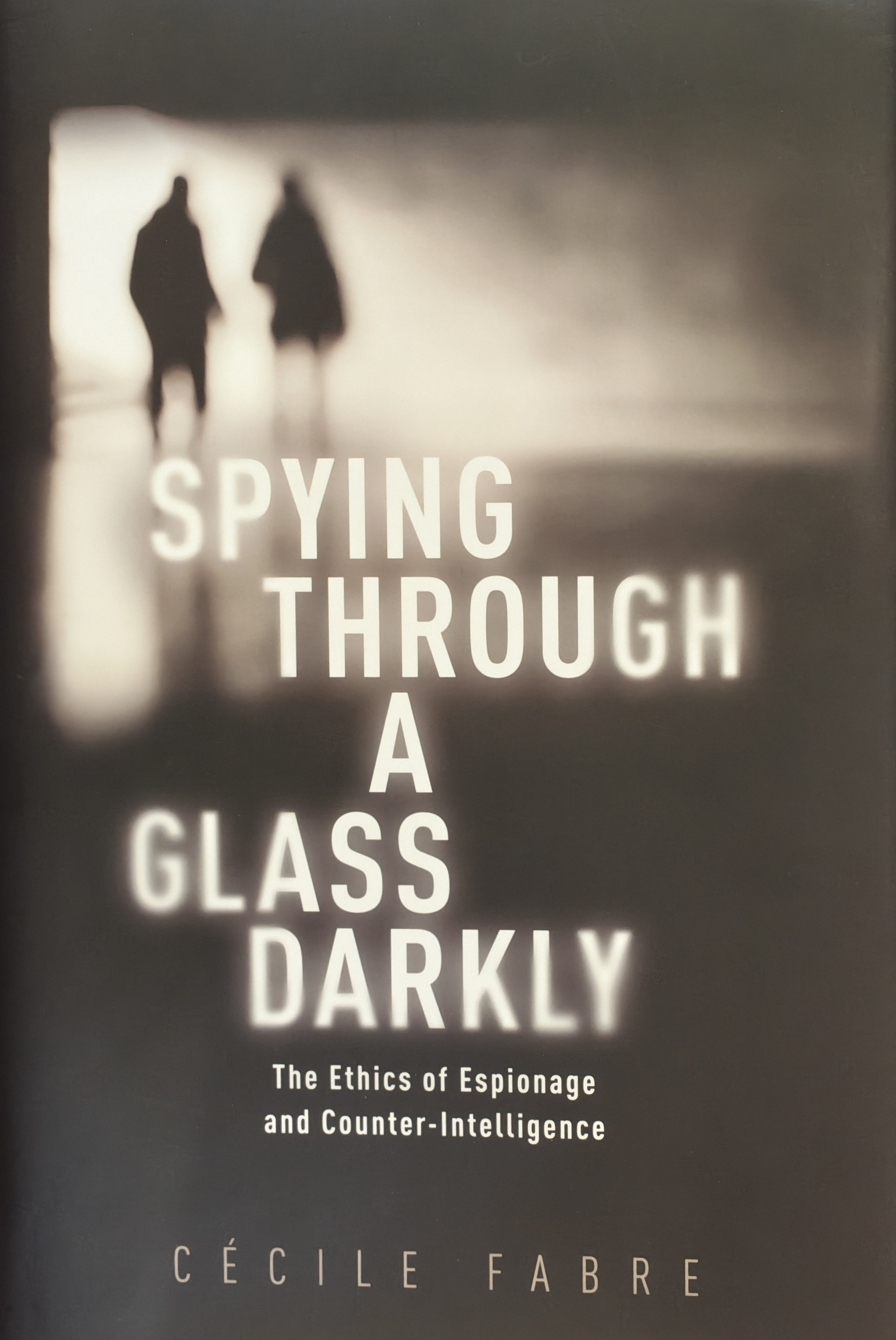
Strong stuff indeed. Perhaps the truth lies somewhere in between, as Professor Cécile Fabre suggests in her book Spying Through a Glass Darkly: The Ethics of Espionage and Counterintelligence (OUP 2022) and in her ongoing work on the ethics of spying in le Carré’s novels. Rather than treating intelligence work as inherently immoral or simply as an unavoidable feature of statecraft, the question is under what conditions espionage can be morally justified. The answer is that espionage and counterintelligence are justified only insofar as they protect individuals from violations of fundamental rights. Intelligence gathering is therefore not valuable in itself, nor is it automatically permissible because states pursue it. Granted, it routinely involves concealment, lies, and manipulation. Rejecting Kant’s uncompromising condemnation, Fabre argues that deception can sometimes be morally required when it protects people against serious injustice. So can treason – which is normally viewed as among the gravest political crimes. But loyalty to one’s state cannot be absolute. Individuals may be justified—and occasionally morally required—to betray their own government if doing so prevents serious violations of fundamental rights.
Crucially, intelligence agencies should not be treated as existing outside ordinary morality. Their activities must be assessed using the same principles that govern all exercises of coercive power: respect for persons and the protection of fundamental rights.
John le Carré’s novels – particularly those written during and about the Cold War – offer a complex picture of the morality and immorality of spying. The ends of espionage are rarely just. And even when they are, deception, betrayal and secrecy corrode both institutions and individuals. The question is not so much why spy, but rather can one spy and retain basic human decency. The answer, all too often, is ‘no’. Yet, George Smiley, despite his misgivings about the worth of the country and institutions he is tasked to protect, and the means he employs to that end, does not lose his humanity; nor does he lose his moral compass: at the point at which he has succeeded in persuading his Soviet counterpart and nemesis, Karla, to defect, he is not confident that he has won, in any meaningful sense, such are the costs of his chosen profession.