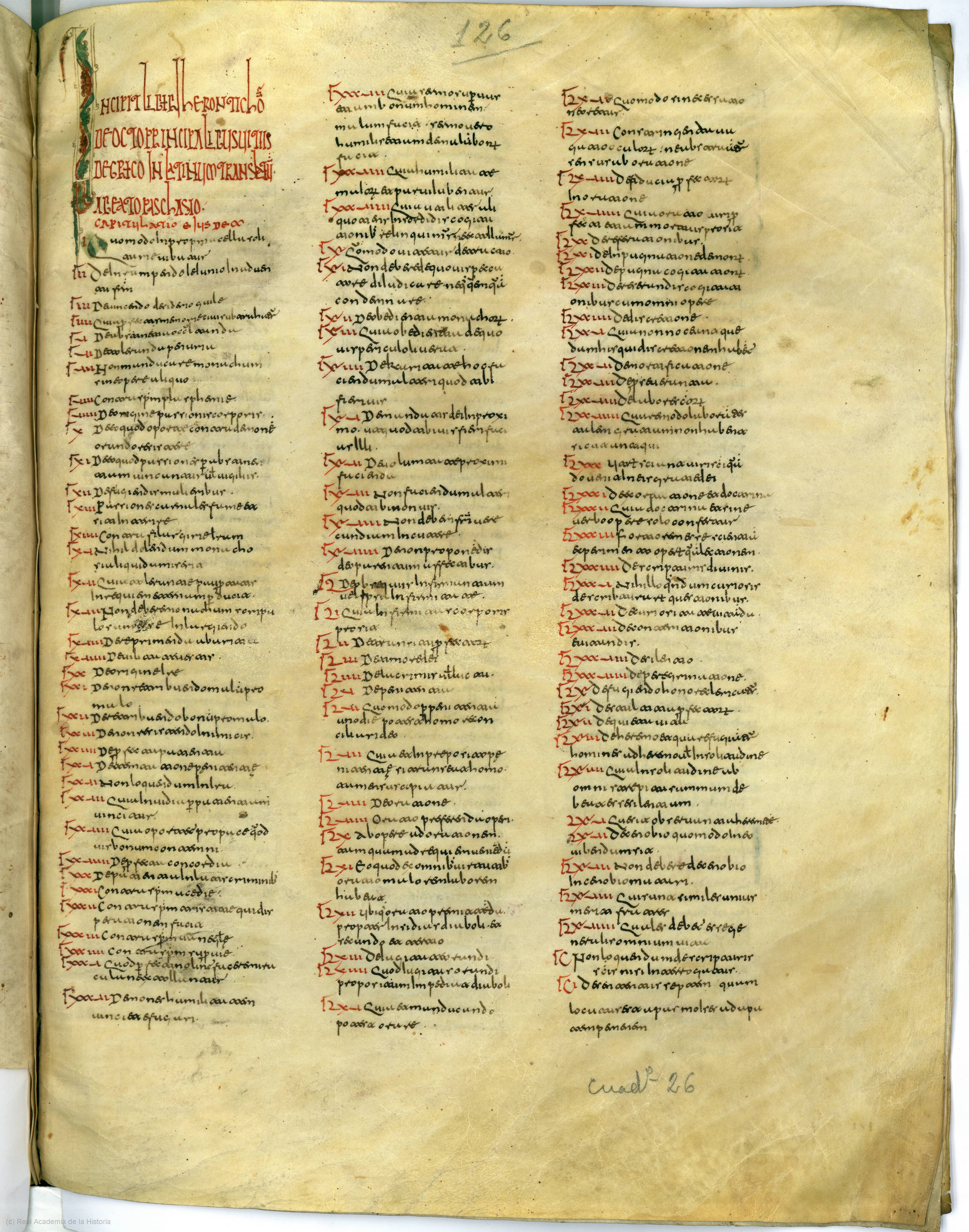
Galicia was a bridge between Greek and Latin culture in the early Middle Ages
The Atlantic and the Mediterranean
The inhabitants of the province of Galicia, in the north-west corner of the Iberian Peninsula, often said that they lived at finis terrae, the far end of the world. Yet, new research is revealing that the region was remarkably well connected. Over the last two decades, archaeologists have established the central role that Galicia played in the Atlantic shipping routes that linked the Mediterranean to southern Britain in the fifth and sixth centuries. It is now becoming clear that the cultural consequences of this connectivity were no less profound.
In fact, new research is revealing the pivotal role that writers and translators in the region played in the transmission of Greek Christian texts to the Latin west. The most remarkable evidence of this is perhaps the work of Paschasius, a monk at the monastery of Dumium (near Braga, modern-day Portugal). Paschasius worked under the guidance of the abbot Martin of Braga, a monk from central Europe who had come to Galicia in the mid-sixth century after spending time in the Byzantine Empire, some 3,000 km from the Atlantic shores of the Iberia Peninsula. Martin’s connections allowed Dumium to become a hub of Greek-to-Latin translation in the second half of the sixth century.
Translation was never a passive act. Figures such as Paschasius actively shaped and reworked the material they translated, affecting how it would be received in medieval Europe in the coming centuries. A prime example of this is Paschasius’ longest work, the Liber geronticon de octo principalibus uitiis (literally, ‘Book of the Old Men on the Eight Principal Vices). It was long thought that Paschasius simply translated an existing Greek text to produce this work, but new work has shown that he reassembled different Greek materials to produce a new work organised around a schema of eight ‘principal vices’ drawn from the Latin author John Cassian.
The Translation of the Desert
Paschasius’ ‘Book of the Old Men’ was a collection of sayings and anecdotes (some 358 in all) attributed to the earliest monks of Egypt. Some were short, enigmatic sentences, intended to provide stimulating material for readers to ruminate over. Others were more developed stories recounting the miraculous accomplishments of famous monks or, on occasion, the dramatic falls of those who lapsed. The book places all this action in the deserts of Roman Egypt, where Christian monasticism was usually believed to have begun, though it is clear now that the most influential collections of these sayings were assembled in Greek-speaking communities in Palestine in the fifth and sixth centuries.
What was the relevance of this material to a monk thousands of kilometres away on the Atlantic fringe of Europe? The inhabitants of the increasingly wealthy and powerful monasteries of the early medieval looked back to their distant Egyptian forebears—or at least, a particular literary rendering of them—as sources of inspiration and legitimacy. Though their own lives, in communal, landowning monasteries were very different from those of the desert monks, the increasingly mythologised accounts of the pioneers that appeared in works such as the ‘Book of the Old Men’ served an important role in defining what monasticism should be.
Those, such as Paschasius, who helped forge the memory of the monastic past wielded a great deal of power. As cultural brokers between the Greek and Latin worlds, and between the past and present of the monastic tradition, they influenced the shape of Christian institutions as they rose to prominence across western European societies. The Atlantic regions, far from being peripheral to this interregional exchange, were actually an essential part of this process.
Why it matters
The breakdown of the western Roman Empire transformed the political geography of the ancient world but networks of connectivity and cultural communication never completely broke down. Texts and ideas continued to move between communities, regions, and languages. The writers who transmitted and reshaped these ideas wielded power in shaping how important legacies were received in the Latin west.
Dr David Addison, a 2025 Fifty Pound All Souls Fellow, focuses his research on the social and cultural history of religion, particularly Christianity, in late antiquity and the early Middle Ages.
Addison, D. (2025) ‘Visions of the Desert in Atlantic Iberia: The Enigmas of Paschasius of Dumium’s Liber geronticon’, Al-Masāq, 37(1), pp. 73-95. doi: 10.1080/09503110.2024.2423536
Image rights: https://bibliotecadigital.rah.es/es/consulta/registro.do?id=26