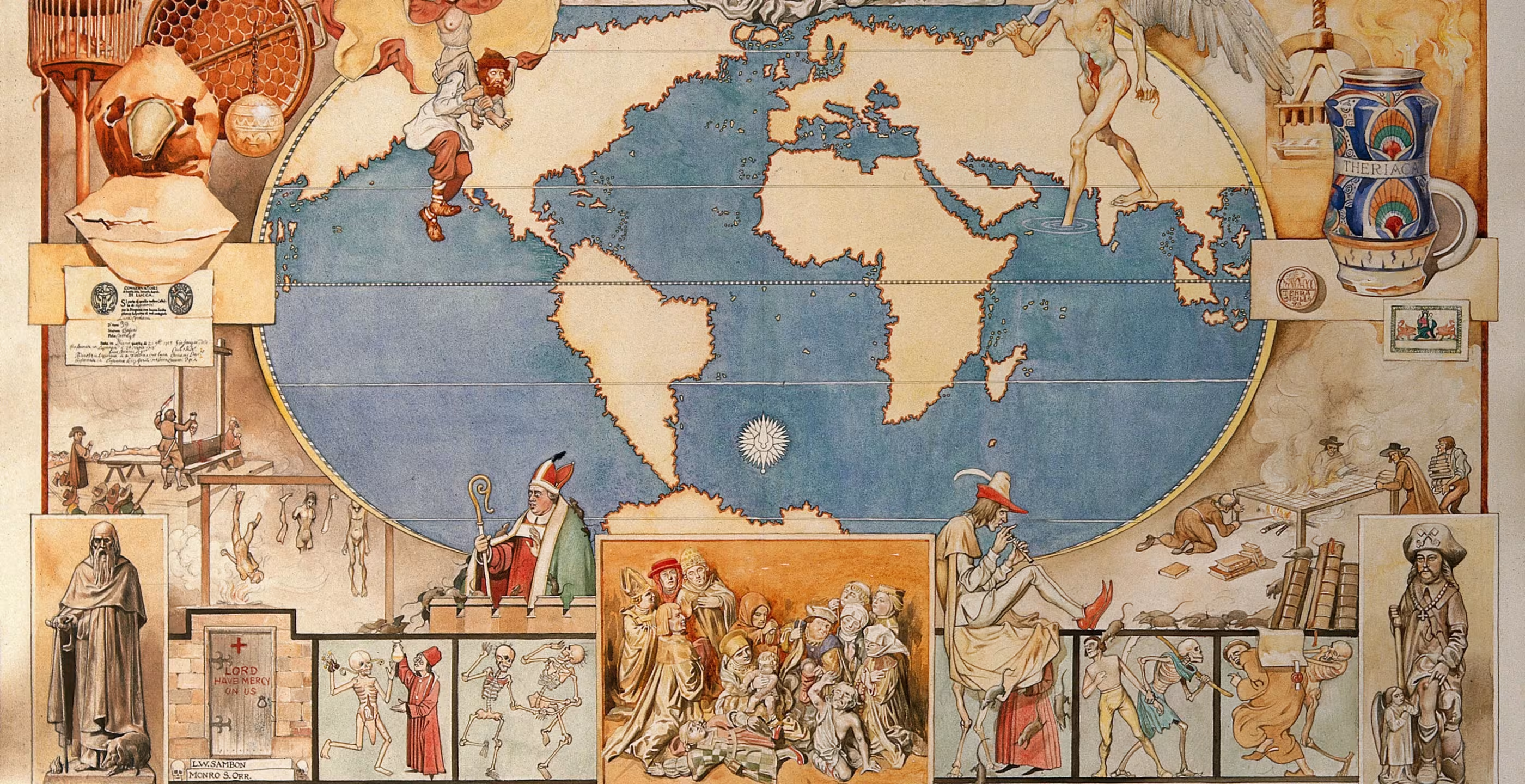
25 minutes on… Plagues: Lecture One - 'Plague, Politics and People: Seven Centuries of Epidemics'
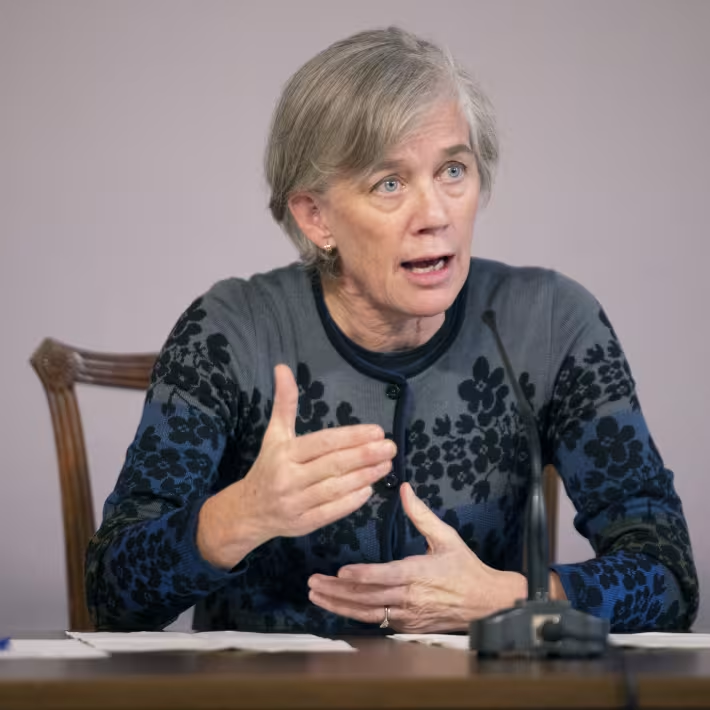
Sheilagh Ogilvie is the Chichele Professor of Economic History at the University of Oxford, a Fellow of All Souls College, and a Fellow of the British Academy. She explores the lives of ordinary people in the past and seeks to explain how poor economies grow richer and improve human well-being. Her research examines how social institutions – the formal and informal constraints on economic activity – have shaped economic development from the Middle Ages to the present day, with a particular interest in central and eastern Europe.
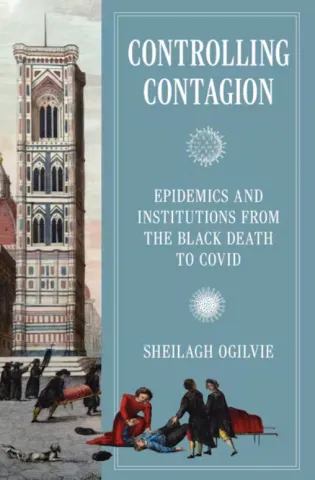
In this talk she asks how societies have tackled epidemic disease across seven centuries, from the Black Death to Covid-19. Human institutions – markets, states, communities, religions, guilds and families – have helped both to limit contagion and to make it worse; what decided the outcome, she argues, was a temperate state, an adaptable market, and a civil society diverse enough for institutions to check one another’s failings. The talk draws on her book Controlling Contagion: Epidemics and Institutions from the Black Death to Covid (Princeton University Press, 2025), which was named a Choice Outstanding Academic Title.