'sizes': '(min-width:100px) 384px, (min-width:384px) 640w, (min-width:640px) 750px, (min-width:750px) 828px, (min-width:828px) 1080px, (min-width:1080px) 1200px, (min-width:1200px) 1920px, (min-width:1920px) 2048px, 3840px',
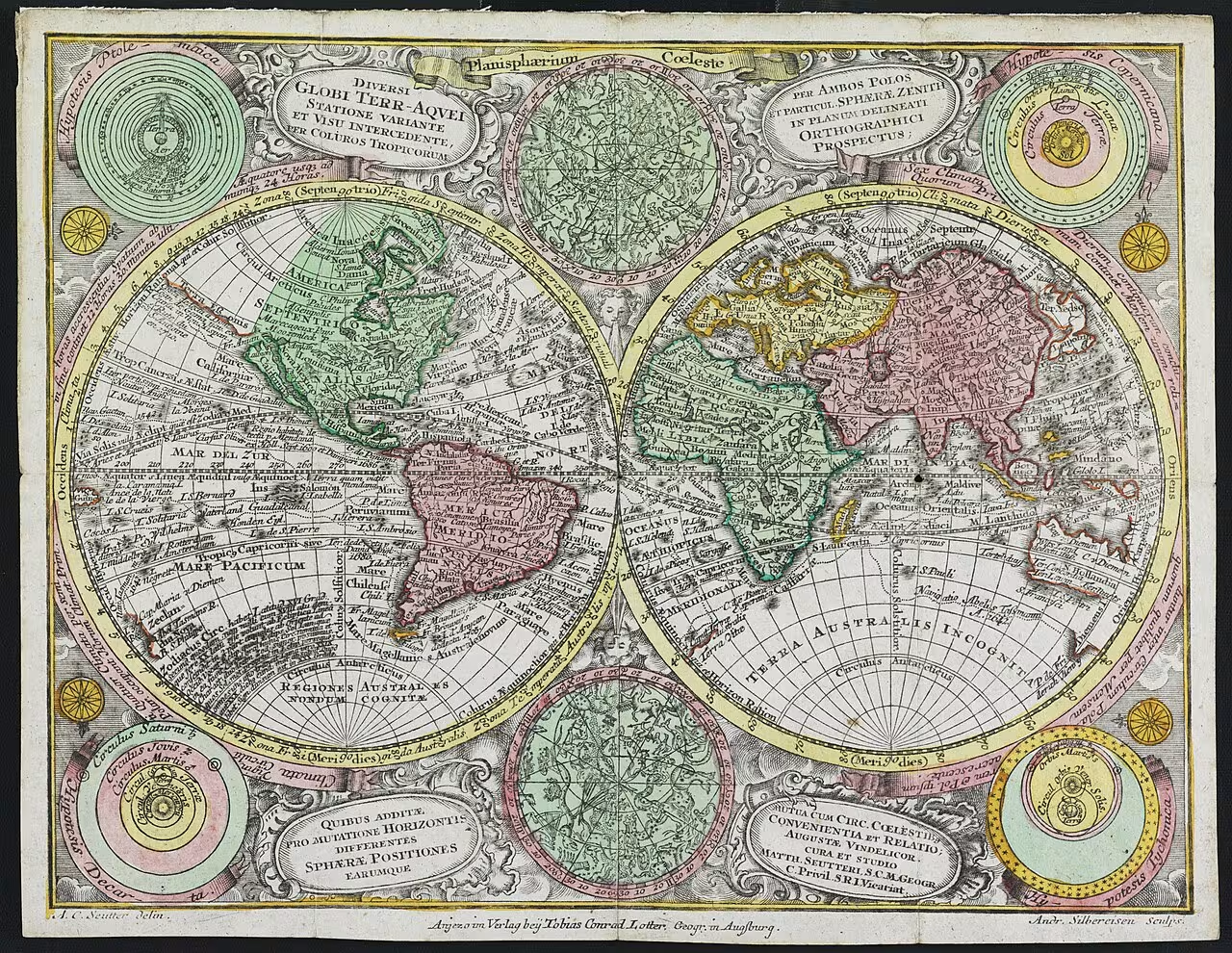
Global Intellectual History Seminar | Seminar 6: Bringing the Elephant into the Room: Garcia de Orta's Colóquios (1563) and the Circulation of Knowledge in the Indian Ocean
Location:
Rector's Drawing Room, Exeter College
Audience:
University of Oxford members
General Public
Date / Time:
-
Speaker: Professor Kapil Raj
How should we write the history of knowledge when the people, commodities, practices and ideas under study routinely crossed the political and cultural boundaries within which historians have traditionally situated them? This talk approaches the question through a relational history of knowledge, drawing on and critically engaging with recent work in transnational and global intellectual history, connected and circulatory history. Rather than treating knowledge as originating in one place and subsequently being transmitted elsewhere, a relational approach asks through which spaces, actors and practices knowledge is produced, transformed, used and circulated.
Garcia de Orta’s Colóquios dos simples e drogas… da Índia (Goa, 1563) offers an especially revealing case. Usually situated within a predominantly European history of natural history and medicine, the work is here relocated to the commercial and intellectual ecology of Portuguese Asia and the Indian Ocean in which it was conceived. Orta’s experience as physician, imperial official, diplomat and merchant, together with the prominence of merchants among his sources, the commercial information embedded throughout the dialogues, and the practical knowledge required to identify, evaluate and use drugs, spices and other naturalia, point to a Portuguese-speaking commercial community operating across diverse spaces of circulation. The Colóquios thus emerges not simply as a repository of knowledge but as a guide to knowledge in motion, in which knowledge, use and circulation were inseparably intertwined. Its subsequent transformation by Clusius for a European community of physicians and naturalists demonstrates how the movement of knowledge between different spaces also entailed transformations of its form, content and function.