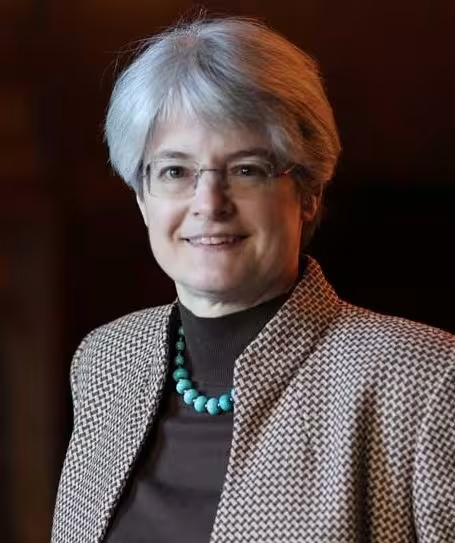
Estates Bursarship Election

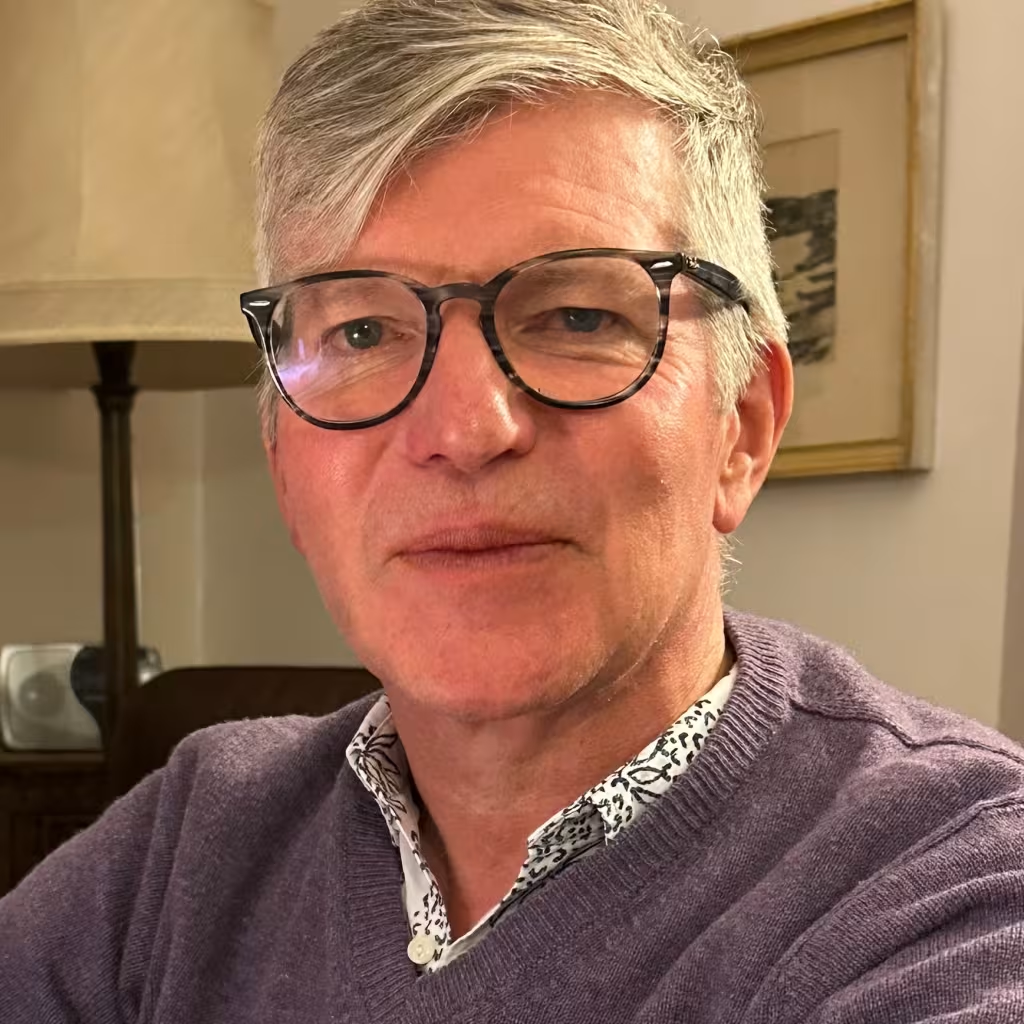
The College has elected David Renton to succeed Tom Seaman as Estates Bursar from the next academic year.

Professor Santanu Das wins Book Awards

For his book India, Empire and First World War CultureWritings, Images, and Songs (CUP, 2018) -- Professor Santanu Das, Fellow of All Souls, has been awarded the Hindu Non-Fiction Prize, and the Anand Kentish Coomaraswamy Book Prize of the Association of Asian Studies. 

Examination Fellowship Elections

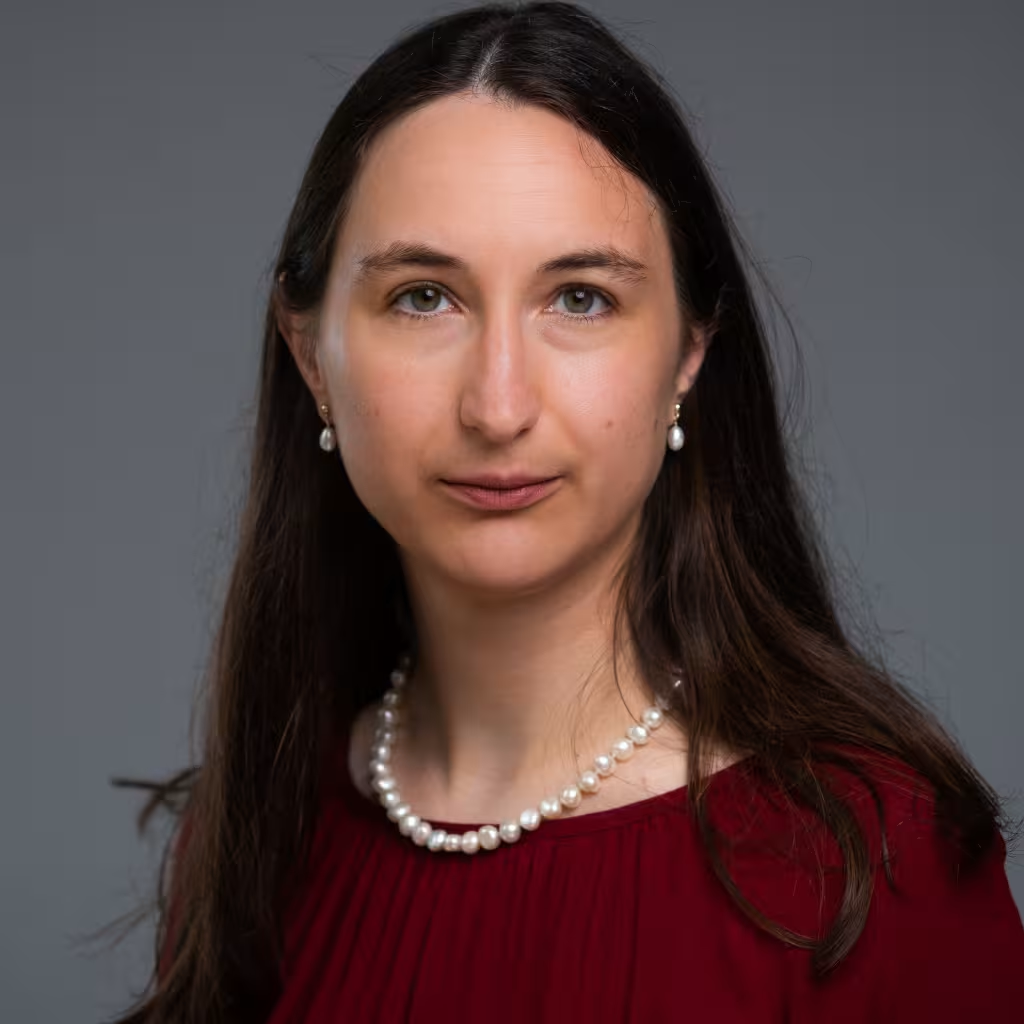
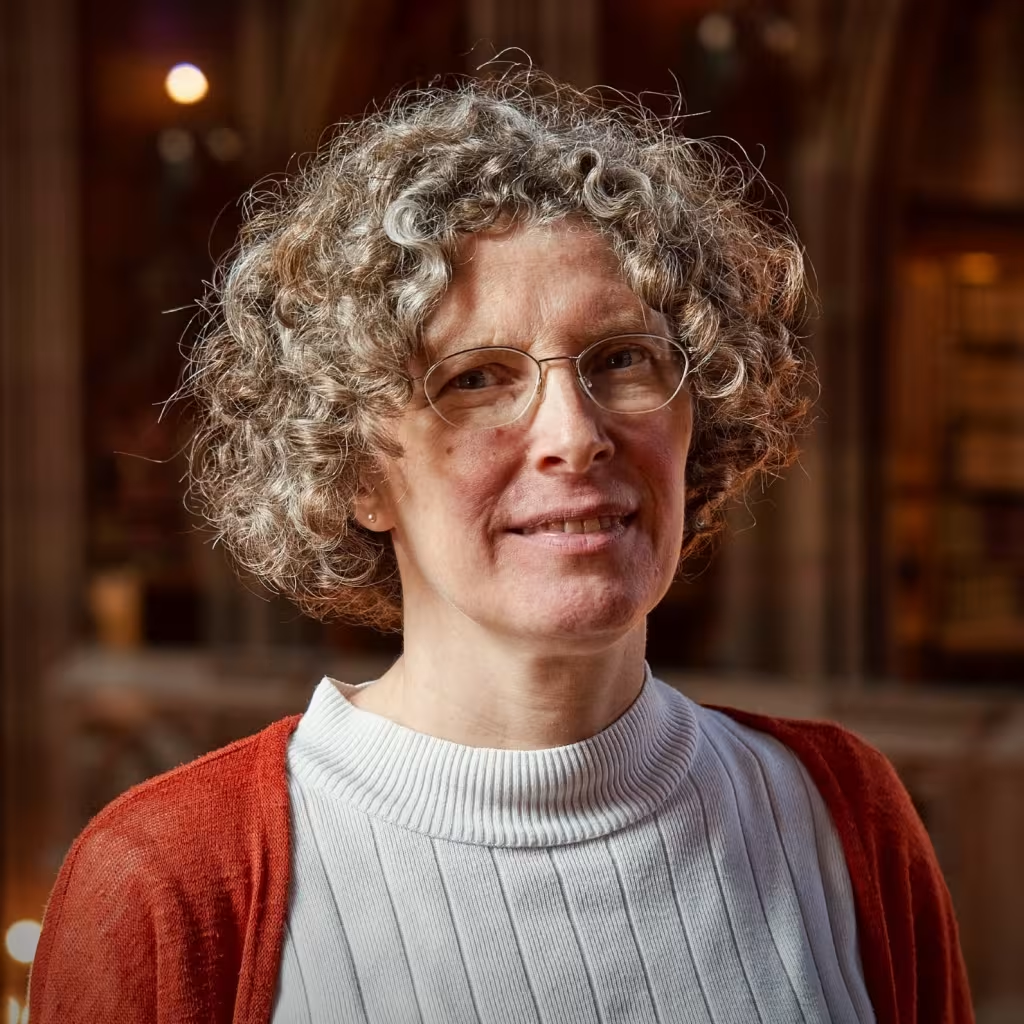
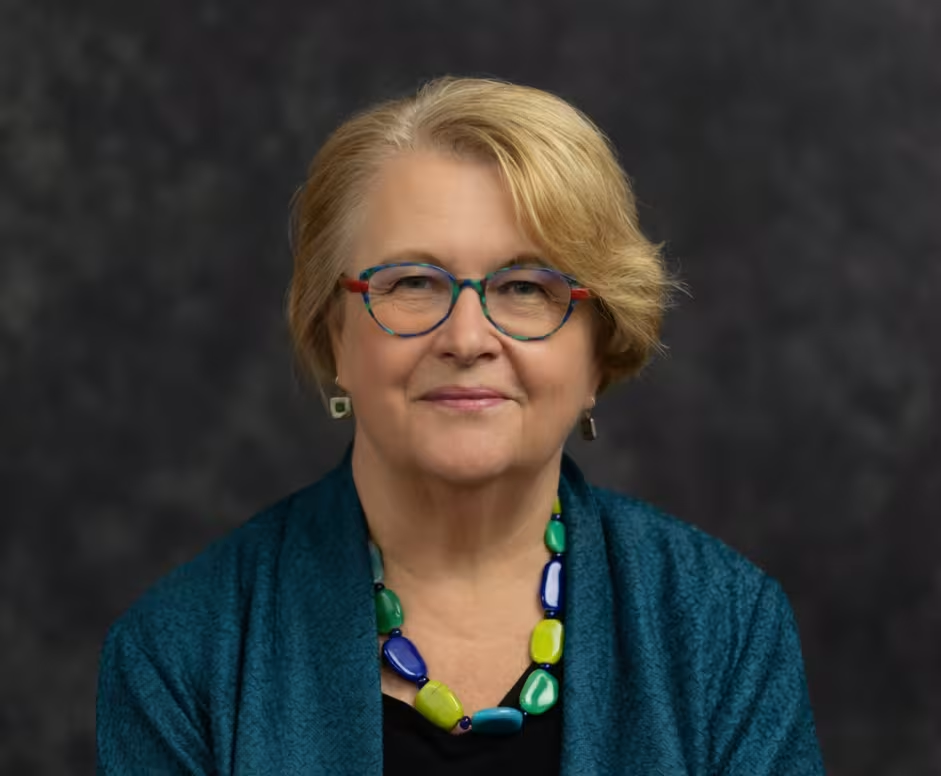
The Warden and Fellows have today elected Alexander Georgiou (Law, Brasenose) and Lucas Tse (History, Hertford) to Fellowships by Examination at the College.  

Post-Doctoral Research Fellowship Elections

The Warden and Fellows of the College have elected to Post-Doctoral Research Fellowships:

Rachel Bryan (Cambridge; English Literature)

Kyle Pratt (Illinois; Mathematics)

Karolina Watroba (Oxford; Modern Languages)

Anne Wolf  (Oxford; Social and Political Sciences)


New Year's Honours

John Redwood, MP for Wokingham, has been knighted in the New Year’s Honours List for political and public service.  Sir John was a Prize Fellow at All Souls from 1972-79 and is currently a Distinguished Fellow of the College.   

Examination Fellowship Elections

The Warden and Fellows have today elected Maya Krishnan (Philosophy, Balliol) and John Merrington (History, Somerville)  to Fellowships by Examination at the College.  

Post-Doctoral Research Fellow Elections

The Warden and Fellows of the College have elected to Post-Doctoral Research Fellowships:

Ross Anderson (Yale; Life Sciences)

Lisa Lodwick (Reading; Classical Studies)

Matthew Mandelkern (MIT; Philosophy)

Jasmine Nirody (Berkeley; Life Sciences)

Srikanth Toppaladoddi (Yale; Theoretical Physical Sciences)

Evans-Pritchard Lectures 2025-2026 - The Reinvention of Rule: Political Leadership and Legitimacy in the Iron Age Eastern Mediterranean, ca. 1200–600 BC

Evans-Pritchard Lectures 2025-2026

The Reinvention of Rule: Political Leadership and Legitimacy in the Iron Age Eastern Mediterranean, ca. 1200–600 BC

Dr Marco Santini, The University of Edinburgh

This series of five lectures proposes an overarching interpretation of key political developments that characterized Greece, Anatolia, and the Levant during the period called the Iron Age (ca. 1200–600 BC).

Events in this series

Evans-Pritchard Lectures 2026: Lecture 5. Fragments Recomposed

27th May 2026, 5:00 pm - 6:30 pm

Location: Old Library

The fifth, and final, lecture brings together the conclusions reached in the previous lectures of the series. It draws a big-picture interpretation of political development in the three selected regions based on common features observed across the three case studies, casting light on shared structural factors that underpinned socio-political transformations in Greece, Anatolia, and the Levant during the Iron Age. Detected common features span from the social profiles of the new political actors to the fluidity of socio-political hierarchies, and include the criteria of political legitimacy as well as the modes of institutionalization of political leadership. Immune to teleological implications, these common features are intended as analytical tools for a cross-cultural investigation of processes of socio-political development and their human protagonists.

Evans-Pritchard Lectures 2026: Lecture 4. Warriors, Traders, and Shepherds of the People: Versatile Heroes in Iron Age Greece

20th May 2026, 5:00 pm - 6:30 pm

Location: Old Library

The fourth lecture focuses on the role of individual leaders as vectors of socio-political development in the early Greek world. The social profile of Iron Age leaders is rooted in that of Late Bronze Age independent agents, some of whom held the same title of qa-si-re-u ≈ basileus as the Homeric and Hesiodic leaders. Despite occasionally serving the interests of the Mycenaean palaces, these figures engaged in military and economic activities independently of them and were thus able to overcome their collapse. Claims to leadership rested on military prowess as well as the capability of establishing overseas networks and of controlling the circulation of metals and trade. Political power was wielded informally, and social cohesion rested on the leaders’ ability to meet the community’s expectations of justice and well-being. The basileis of early Greece were among the main protagonists of the creation of new institutions, a process that had different outcomes, ranging from monarchy (in Cyprus), to diarchy (in Sparta), to systems of power sharing.

Subscribe to