Medieval and Renaissance Music Seminar Series - ‘Newly Discovered Aquitanian Polyphony from c. 1100’

19th October 2023, 5:00 pm - 7:00 pm

Presenter: Sam Barrett (University of Cambridge)


Discussants: Andreas Haug (University of Würzburg) and Margot Fassler (University of Notre Dame).


This paper will present organa for four metra from Boethius’ De consolatione Philosophiae recently discovered in the margins of an Aquitanian manuscript copied c. 1100. It will show that the principal voices relate to the wider tradition of sung Boethian metra and that the organal voices were generated in accordance with principles outlined in theory treatises written towards the end of the eleventh century. The new find expands the number of recoverable melodies for Boethian metra, augments the number of surviving examples of organa consistent with the Ad organum faciendum group of treatises, and extends understanding of early medieval practices of singing non-liturgical versus. The successive disposition of the organum mirrors notational practices used in the earliest layers of Aquitanian polyphony, prompting reconsideration of the implications of surviving neumatic notations for non-liturgical lyric verse and consideration of the possibility that another Aquitanian notation dating from c. 1100 records organum for one of Horace’s Odes. It will be proposed, finally, that non-liturgical song traditions provide a previously overlooked background to the New Song.

Medieval and Renaissance Music Seminar Series - ‘Disiecta Membra Musicae: A new facsimile edition of music manuscript fragments from 14th-Century England’

30th November 2023, 5:00 pm - 7:00 pm

Presenter: Peter Lefferts (University of Nebraska)

Discussants: Andrew Wathey (The National Archives and University of Northumbria) and Jared Hartt (Oberlin College).


A volume of facsimiles of English fourteenth-century polyphonic music in preparation for the series Early English Church Music is intended to supersede Harrison and Wibberley, Manuscripts of Fourteenth Century English Polyphony (EECM 26, 1981). It will fill the current gap between Summers and Lefferts, English Thirteenth Century Polyphony (EECM 57, 2016) and Bent and Wathey, Fragments of English Polyphonic Music c. 1390-1475 (EECM 62, 2022). As in the latter two, leaves will be reproduced in colour, mostly at full size, and in their original order; further, about twice as many sources will be reproduced as in the 1981 book. This talk will address some of the most

interesting features of the relevant new sources uncovered in the last 45 years, consider questions about provenance that have been raised by scholarship on the codices housing these musical fragments in their bindings, and offer a taste of the discoveries yielded by the use of modern research tools, from basic internet text searching to high-resolution digital and multi-spectral imaging. In addition, the repertoire of the extraordinary Dorset rotulus will serve as the point of departure for remarks about what is new in our picture of 14th-century English music.

Medieval and Renaissance Music Seminar Series - ‘Music Printing in Rome during the Long Sixteenth Century’

2nd November 2023, 5:00 pm - 7:00 pm

Presenter: Jane Bernstein (Tufts University)

Discussants: Bonnie J. Blackburn (Oxford) and Noel O’Regan (University of Edinburgh).


Rome ranked second only to Venice as a centre for music book production in Renaissance Italy. Yet unlike their Venetian counterparts, who standardized their music publications, Roman printers, experimented more readily and more consistently with the materiality of their books. Emphasizing the exceptionalism of Roman music publishing, this talk highlights the innovative printing technologies and book forms devised by bookmen in the Eternal City. By drawing on landmark publications, it reveals a synergistic relationship between music repertories and the materiality of the book, particularly during the post-Tridentine period, when musical idioms, both new and old, challenged printers to employ alternative printing methods and modes of book presentation in the creation of their music editions.

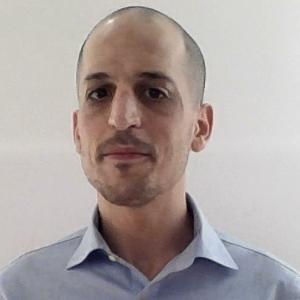
A headshot of Dr Paula Chan

Dr Paula Chan

BA, MSLIS, MA, PhD
Post-Doctoral Research Fellow since 2023

I am a historian of the Soviet Union whose research centers on Stalinism, World War II, the Holocaust, and their intertwined aftermaths. My current book manuscript, Eyes on the Ground: Soviet Investigations of the Nazi Occupation, examines the Extraordinary State Commission established by Stalin’s government in 1942 to gather documentation of Axis war crimes. My second book project, tentatively titled Jewish Choices in Soviet Riga, is a collective biography of Holocaust survivors who worked for Soviet state security organs after World War II only then to be prosecuted themselves in the course of antisemitic repressions during Stalin’s final years. Prior to earning my doctorate, I worked as a digital archivist.

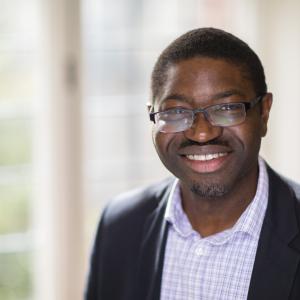
A head shot of Dr Nuno Castel-Branco

Dr Nuno Castel-Branco

B.Sc., M.Sc., Ph.D.
Post-Doctoral Research Fellow since 2023

I am a historian of early modern culture and science. I am especially interested in the social and intellectual interactions between disciplines such as physics, medicine, and theology in early modern Europe and its global expansion. I am currently concluding a book about the emergence of the new sciences in seventeenth-century Europe through the fascinating career of Nicolaus Steno. I argue that Steno’s greatest innovation was introducing methods and ideas from various disciplines, especially mathematics, and chymistry, into anatomy. Undergirding this variety of approaches was Steno’s ability to forge friendships with scholars, princes, artisans, and women. I use Steno’s career to uncover novel interactions between science and religion. My second project aims to improve our historical knowledge of how mathematicians, anatomists, and patrons cooperated in the early 1600s. This project builds upon my previous research on early modern Italy and the Iberian oceanic expansion. I am also interested in science and religion, for which I am currently co-organizing two workshops at the Max Planck in Berlin.

New Domestic Bursar: Steve Evans

The College is pleased to announce that Steve Evans will be the next Domestic Bursar at All Souls. He will take up post on 1 July 2023, and will become a Fellow of the College in the autumn.

""

Steve Evans

Domestic Bursar
MBA, ACMA
Domestic Bursar since 2023
Subscribe to