All Souls College was founded in 1438, when the recurrent waves of plague set in train by the Black Death of 1347–52 were still sweeping Europe, Oxford included. Its statutes obliged the Warden and Fellows to pray for the souls of the founders, of those who had fallen in the wars with France, and of ‘all the faithful departed’ – among whom the victims of epidemic disease must have loomed large. It seems timely to revisit the subject now that a global pandemic has brought it to the fore again.
Plagues have shaped people’s lives for as long as people have been around – whether through disease and suffering at a personal level, or destabilising entire empires and countries.
The threat of pandemic still looms large, as the COVID-19 pandemic and international lockdowns provide a very recent reminder of the power of plagues to destabilise all our lives, even today. These talks give an accessible overview of the latest academic research into plagues, from the perspectives of both humanities and sciences.
The theme of plagues has been discussed before in a formal lecture series in 2014 at Darwin College, Cambridge. If you’d like to find out more about the topic of plagues (across the past, present and future), those can be viewed online here.
The talks will take place in the Old Library at All Souls College on Fridays at 1pm, on the 23rd and 30th of October, and the 6th, 13th and 20th of November, 2026. The talks will be filmed (for publication online) for the approximately half hour duration when speakers are presenting, after which there will be time for questions that will not be filmed.
The Full Lecture Series:
Friday 23 October - 1pm:
‘Plague, Politics and People: Seven Centuries of Epidemics’
Professor Sheilagh Ogilvie
In this talk Professor Ogilvie asks how societies have tackled epidemic disease across seven centuries, from the Black Death to Covid-19. Human institutions – markets, states, communities, religions, guilds and families – have helped both to limit contagion and to make it worse; what decided the outcome, she argues, was a temperate state, an adaptable market, and a civil society diverse enough for institutions to check one another’s failings. The talk draws on her book Controlling Contagion: Epidemics and Institutions from the Black Death to Covid (Princeton University Press, 2025), which was named a Choice Outstanding Academic Title.
Friday 30 October - 1pm:
‘The Consequences of the Earliest Outbreaks of Plague in Prehistory’
Dr Ruairidh Macleod
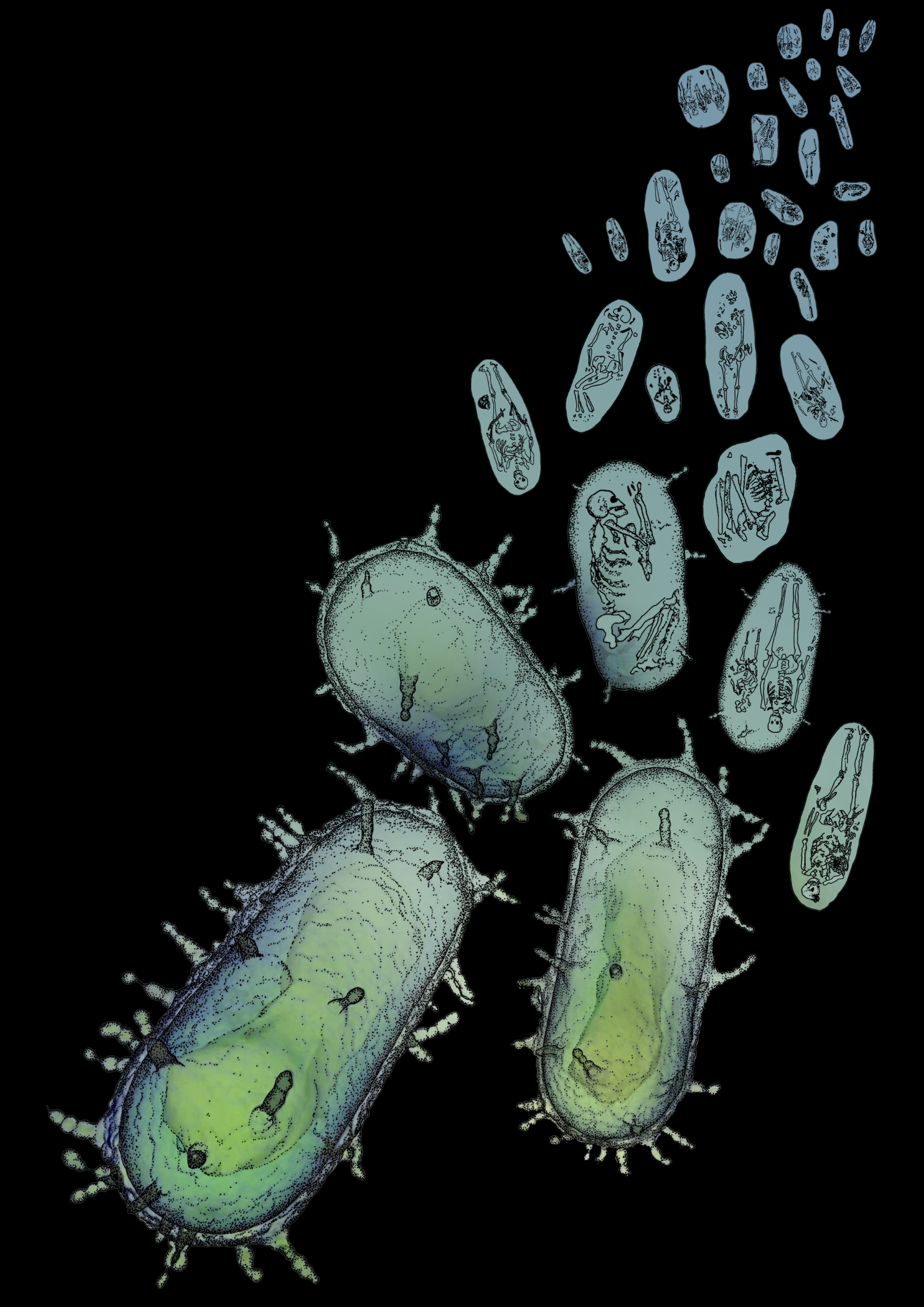
In this talk, Dr Macleod will describe his research on the first known outbreaks of plague, caused by the bacterium Yersinia pestis, among prehistoric hunter-gatherers at Lake Baikal some 5,500 years ago. By reconstructing the kinship of the victims and tracing the bacterium’s evolution, the research shows what followed when the disease crossed from animals to humans, and why mortality fell so heavily on children. Ruairidh’s research on this was published in a paper featured on the cover of the journal Nature and reported on widely.
Friday 6 November - 1pm:
‘Using Mathematical Models to Plan the Prevention or Control of Plagues’
Professor Dame Angela Mclean
Angela McLean is a Distinguished Fellow of All Souls College and the UK Government Chief Scientific Adviser, a post she took up in April 2023. She was previously a Senior Research Fellow at All Souls, Professor of Mathematical Biology at the University of Oxford, and Chief Scientific Adviser to the Ministry of Defence. Her research uses mathematical models to understand the spread and evolution of infectious agents. In her current role she is responsible for ensuring that excellent scientific advice informs government decision-making.
Friday 13 November - 1pm:
‘The Plague of Cyprian and the Crisis of the Roman Empire’
Professor Andrew Wilson
Among the many problems that affected the Roman Empire in the third century AD — wars, revolts, invasions, earthquakes, and famine — was a disease known as ‘the Plague of Cyprian’ after St Cyprian of Carthage who describes it in his letters. This talk explores how archaeology can illuminate the effects of this pandemic, by looking at mass burials, shrinkage of cities, abandonment of rural settlements, and disruption to various forms of production. It argues that the plague of Cyprian provoked a systemic transformation of the empire and underlies the greater inequality characteristic of the late empire: hereditary professions, tied peasantry, and vast estates.
20 November - 1pm:
‘Evolutionary Drivers of Antibiotic Resistance’
Professor Craig MacLean
In the mid 20th century, antibiotics were seen as miracle drugs that would eliminate the burden of bacterial disease. The evolution of antibiotic resistance in pathogenic bacteria is rapidly eroding the utility of antibiotics, with some models predicting that resistant infections will become the leading cause of death by the mid 21st century. This talk will focus on how ecological and evolutionary approaches can help us to understand how antibiotic resistance spreads in pathogen populations, and how we can develop new interventions to overcome this problem.
Header image courtesy of Katherine Hearne