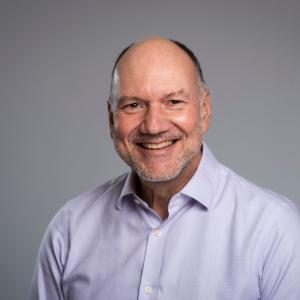
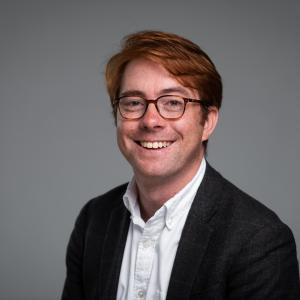
Professor Gavin Salam

BA, PhD, FRS
Senior Research Fellow since 2018

My research centres on Quantum Chromodynamics (QCD, the theory of quarks and gluons) and how to use it in order to advance our understanding of the fundamental particles and interactions of the universe.

My work is mostly directed towards high-energy particle colliders, notably the Large Hadron Collider at CERN, with applications in studies of the Higgs boson, searches for new particles, precision measurements of fundamental constants and studies of heavy-ion collisions.

Professor Santanu Das

PhD
Senior Research Fellow since 2019

I work on early twentieth-century literature and culture, and am especially interested in the relationship between experience, writing and emotion in times of conflict. My first book examined the role of the senses, particularly touch, in First World War experience and literature, while my recent work has focussed on the colonial dimensions of war culture and memory through an expanded notion of the 'archive' - artefacts, photographs, paintings, rumours, folksongs and sound-recordings, as well as testimonial, political and literary writings. Having just completed a monograph on India and First World War culture, I am about to begin work on two projects: the Oxford Book of Colonial Writings of the First World War and a monograph on the experience and imaginings of sea-voyages in a global context, from Victorian times to now.

Professor Lucia Prauscello

MA, PhD
Senior Research Fellow since 2018

Dr Fitzroy Morrissey

MA, MPhil, DPhil
Quondam Fellow since 2023

Dr David Addison

BA (Hons), MSc, DPhil
Fifty Pound Fellow from 2025

My research focusses on the social and cultural history of religion, particularly Christianity, in late antiquity and the early Middle Ages. 

I am presently engaged in a comparative project on the Atlantic regions of western Europe, drawing on case studies from Portugal, Galicia, and the Basque Country, through Aquitaine and Brittany, to Ireland and western Britain. This project has two main aims: firstly, to investigate the role played by monastic and ascetic structures in the institutionalisation of Christianity in these different regions; secondly, to trace the role that connectivity along the Atlantic seaboard played in cultural transmission (particularly of monastic texts) between the eastern Mediterranean and northern Europe. As part of this project, I have a strong interest in comparative historiography - that is, in understanding the ways in which different regional and national scholarly traditions have inflected our understanding of the past.

Prior to this, I worked chiefly on the Iberian Peninsula in the Suevic and Visigothic periods. My forthcoming monograph will illuminate the importance of ethical discourse in the assertion and contestation of religious power in late antique Iberia, and challenge institutionally focussed accounts of Christian history. Other publications arising from this research have addressed martyr cult, lay religion, and the history of Visigothic manuscripts.

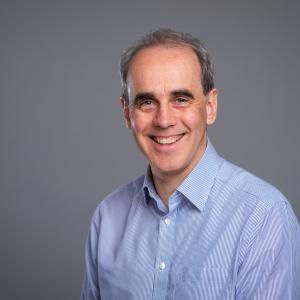
Professor Stathis Kalyvas

Gladstone Professor of Government
BA, MA, PhD, FBA
University Academic Fellow since 2018

Dr Srikanth Toppaladoddi

BE, MS, MPhil, PhD
Quondam Fellow since 2022

Matthew Mandelkern

BA, PhD
Quondam Fellow since 2020

I work in philosophy of language and neighboring fields. For more information and publications, please visit https://mandelkern.hosting.nyu.edu/.

Dr Lisa Lodwick

BA, MSt, DPhil, FSA
Post-Doctoral Research Fellow from 2017 to 2022
21 July 1988 - 3 November 2022

Dr Ross Anderson

Associate Professor of Natural History, University of Oxford
AB, MPhil, PhD
Fifty-Pound Fellow since 2023

The emergence and diversification of complex life is the most fundamental biological transition in the history of the Earth. My lab uses exceptional fossils to chart the evolution of eukaryotes (those organisms with membrane-bounded organelles), multicellularity, cellular differentiation, and animals, through the Proterozoic Eon (2.5-0.5 billion years ago). Understanding how changing fossil diversity correlates to environmental changes—and the Proterozoic Eon sees some of the largest in Earth history—is vital to determining evolutionary drivers.

Not only do we seek new fossils that provide this important palaeobiological information, we critically interrogate the nature of the fossil record. Before the terminal Proterozoic advent of biomineralisation, fossilisation is confined to poorly understood and unusual circumstances that preserve organic remains. My lab uses novel analytical techniques on fossiliferous strata to understand the conditions conducive to preservation, with a specific focus on microbe-mineral interactions. Such research is crucial to our ability to robustly interpret the temporal and ecological range of fossil organisms. It can also provide new insights into their original chemistry and biology.

My lab is always looking for talented and motivated researchers. If you are interested in joining our group as a doctoral student or post-doctoral researcher, please contact me via email.

Website: https://palaeobiology.web.ox.ac.uk/people/dr-ross-anderson

Subscribe to