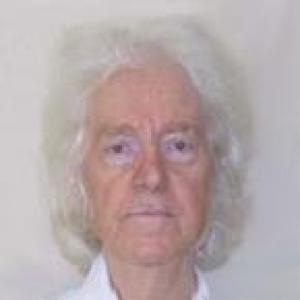
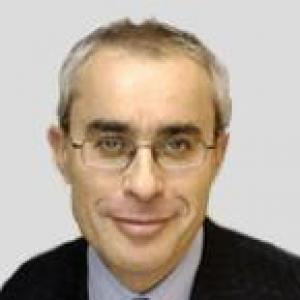
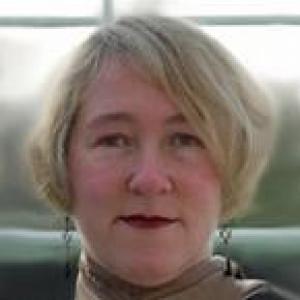
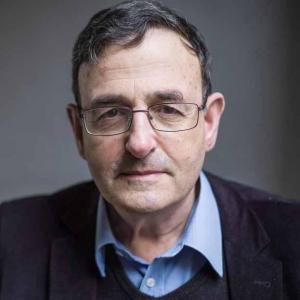
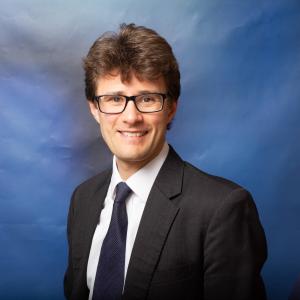
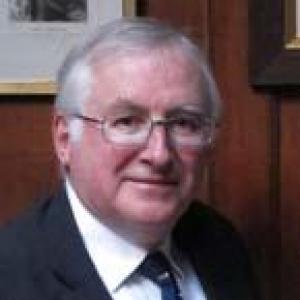
Head and shoulders shot of Fraser Campbell

Fraser Campbell KC

MA
Quondam Fellow since 2020

Fraser Campbell KC is a barrister at Blackstone Chambers in London. He specialises in commercial disputes, and is also experienced in judicial review cases. Prior to being appointed silk in March 2025, he was a member of the Attorney General’s ‘A’ Panel of Counsel. He serves on the Advisory Board of the legal mentoring charity Lawyers Who Care, and as a trustee of the charitable trust that oversees the Oxford Union. His current research interests focus on the control of powers in private law: he is a contributor to the forthcoming next edition of the textbook Thomas on Powers (Oxford University Press).

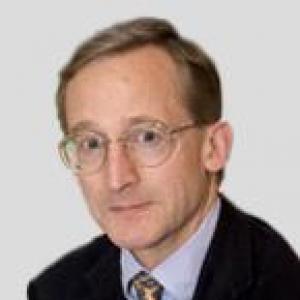
Professor Colin Burrow

MA, DPhil, FBA
Senior Research Fellow since 2006

I work on Renaissance literature, and have a particular interest in classical influences on English writing. I have edited the poems of Shakespeare for the Oxford Shakespeare and of Ben Jonson for the Cambridge Ben Jonson, and have published widely on English writers from 1500-1700. I am presently working on two large projects: a history of Elizabethan literature for the Oxford English Literary History and a study of the idea and practice of literary imitation.

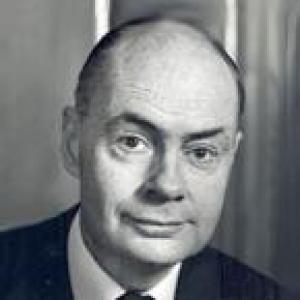
Sir Ian Brownlie

CBE, QC, DPhil, DCL, FBA, Commander of the Order of Merit of the Norwegian Crown
Distinguished Fellow from 2004 to 2010
19 September 1932 - 3 January 2010

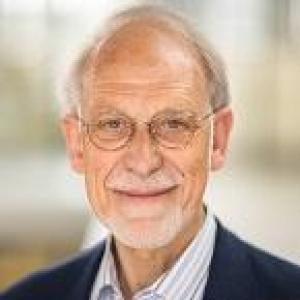
Robin Briggs

MA, FRHistS, FRSL, FBA
Emeritus Fellow since 2009

I am working on a book covering the history of North-Western Europe from c. 400 A.D. to 1914. Recent publications include a chapter on ‘The Rhine-Moselle Borderlands’ in The Oxford Handbook of Witchcraft (ed B. Levack), an article on ‘From Devilry to Sainthood: Mère Jeanne des Anges and the Catholic Reform’ in Women and Religion in the Atlantic Age, 1550-1900 (ed. M. Laven and E. Clark), and an article on ‘The Gallican Context for Pascal's Writings on Grace’ in Seventeenth Century French Studies. Other pieces in the press are contributions on social problems and policies in the later years of Louis XIV, and on emotions and witchcraft as they appear in Lorraine trial records. My current research interests are necessarily very wide, because I am writing a general book covering an immense span of European history. However I do also maintain a particular interest in seventeenth-century French history, with a more precise focus on the half-century of troubles from 1610-61. My next project is likely to be a book attempting to rethink aspects of this crucial period, where much recent work has added to our detailed knowledge, but there has been little in the way of changes to broader interpretations that now look dated and inadequate.

Professor Paul Brand

MA, DPhil, FBA, FRHistS
Emeritus Fellow since 2014

Paul Brand continued work on English legal history, publishing two articles and presenting papers in Erice (Sicily), Royaumont (France), Ann Arbor and Michigan (USA) and in Leeds, Glasgow and Harlaxton. He acted as graduate interviewer for medieval history for the Faculty of History in Oxford for 2012/13 and taught a legal history course at Ann Arbor in March and April 2013. In the summer of 2012 he became one of the lead investigators of a major three year AHRC-financed Magna Carta project.

Dr Margaret Bent

CBE, FBA, PhD
Emeritus Fellow since 2008

Margaret Bent's publications range over English, French and Italian polyphonic musical repertories, manuscripts, compositional processes, notation and theory of the 14th to 16th centuries. Recent publications include a study and facsimile of the early 15th-century Veneto manuscript Bologna Q15 (2008), and (with Robert Klugseder) a reconstructed Liber cantus from the Veneto (2012). Her current work explores networks of musicians in the Veneto, and she has just completed a monograph relocating the origins of Jacobus, the author of the Speculum Musicae, from Liège to Spain (2015).

Professor Andrew Ashworth

CBE, KC (Hon), LLB, MA, PhD, DCL, DJur (Hon), LLD (Hon), FBA
Emeritus Fellow since 2013

My current research interests centre on three areas – sentencing principles; the idea of preventive justice, and the need for safeguards where ‘the protection of the public’ is invoked in support of coercive measures; and the justifications for convicting people for omissions, i.e. for failing to act in a given situation, and particularly exploring the duties that citizens do or ought to have.

Dr James Adams

CBE, BA, MA, DPhil, FBA, FAHA
Senior Research Fellow from 1998 to 2010; Emeritus Fellow from 2010 to 2021
24 September 1943 - 11 October 2021

Roger Hood (1936-2020)

It is with great sorrow that the College reports the death of Professor Roger Hood CBE, QC (Hon), FBA, on Tuesday 17 November, following a short illness.

Professor Hood was Director of the University’s Centre for Criminology and a Fellow of the College from 1973 until retirement in 2003, when he became an Emeritus Fellow

All Souls College and the Codrington legacy

Christopher Codrington, a former Fellow of All Souls, died in 1710, leaving a bequest of £10,000 to the College for building a new library and stocking it with books; this new library became generally known as the Codrington Library, although that name was never formally adopted by the Statutes of the College. Codrington’s wealth derived largely from his family’s activities in the West Indies, where they owned plantations worked by enslaved people of African descent.

Over the last three years the College has taken several steps to address the problematic nature of the Codrington legacy. It has erected a large memorial plaque at the entrance to the Library, ‘In memory of those who worked in slavery on the Codrington plantations in the West Indies’. It has pledged a series of donations to Codrington College, Barbados (a theological college also founded by a bequest in Codrington’s will) to a total of £100,000. And it has set up three fully funded graduate studentships at Oxford for students from the Caribbean; in effect, £6 million of the College’s endowment is now set aside, on a permanent basis, to produce the income that funds these studentships. 

At a meeting of its Governing Body in November 2020, All Souls College decided to cease to refer to the College Library as 'the Codrington Library'.

The College also decided that the statue of Codrington which stands at the centre of the Library will remain there. Rather than seek to remove it the College will investigate further forms of memorialisation and contextualisation within the library, which will draw attention to the presence of enslaved people on the Codrington plantations, and will express the College’s abhorrence of slavery. The College also decided to investigate some further academic initiatives that would address the issue of the Codrington legacy.

Subscribe to