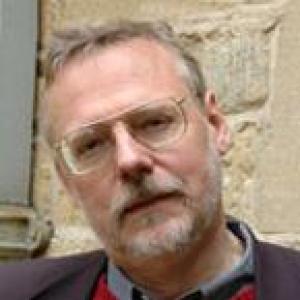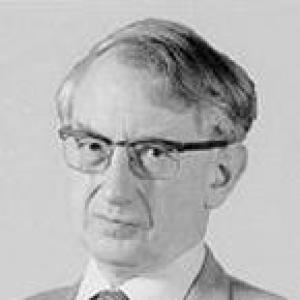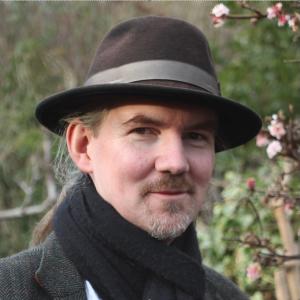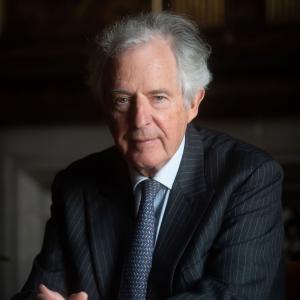
Professor Deborah Oxley

BA, MA, PhD, FRHistS
Quondam Fellow since 2020

My key research interests: Height and health in history; Body mass - a new frontier in anthropometrics; Micro-economics of the household; Penal transportation to Australia; Coercive labour systems; Colonial Australian development; Crime and punishment in Great Britain and Ireland.

Professor Avner Offer

MA, DPhil, FBA
Emeritus Fellow since 2011

The post-war 'golden age' of economic growth also built up American and European welfare states. This settlement was challenged in the 1970s by a coalition of business, taxpayers, consumers, ideologists and social scientists. Emerging from this core of discontent, market liberalism retrieved the intellectual and political hegemony, although the Great Recession has cast doubt on many of its premises. I study the origins, attributes, and drivers of this movement, its successes, failures, and prospects. I have recently completed *Social Democracy, The Nobel Prize in Economics and the Market Turn* (Princeton UP, forthcoming). I continue to publish in previous areas of interest, including the urban and rural land tenure, finance, the First World War, and consumption and well-being. A new departure is landscape painting in the nineteenth century in relation to earlier interests in agrarian history and the quality of life.

Sir Jeremy Morse

KCMG, MA
Honorary Fellow from 2011 to 2016
10 December 1928 - 4 February 2016
Head and shoulders photograph of George Molyneaux

Dr George Molyneaux

Barrister, Blackstone Chambers, London
MA, DPhil, FRHistS
Quondam Fellow since 2021

My research interests concern medieval Europe, particularly the history of late Anglo-Saxon England.

Default image

Scott Mandelbrote

Fellow, Peterhouse, Cambridge
MA, FSA
Quondam Fellow since 2012

Professor James Malcomson

MA, PhD, FBA
Emeritus Fellow since 2013

My research is primarily concerned with the economics of contracts, especially their implications for labour markets and the provision of health services. In these, as in many other services, important aspects such as the quality of service to be provided are often difficult to specify contractually in advance in a legally enforceable way. Two important issues then arise: (1) how best to structure the contract so that what the parties want is actually provided and (2) what the implications are for delivery of services. I have particular interest in the economics of relational contracts, on-going relationships in which not all contractual details are fully specified in advance in a legally enforceable way. These pervade economic life, especially employment and provision of complex services such as health care.

Sir Noel Malcolm

MA, PhD, FBA, FRSL
Senior Research Fellow since 2002

I have two main fields of interest in my current research: early modern intellectual history, with a special focus on the philosopher Thomas Hobbes (1588-1679); and relations between Western Europe and the Ottoman/Islamic world in the early modern period. There is some overlap between the two, as the second field includes the development of Western thinking about such things as the nature of Ottoman rule and the doctrines of Islam. My recent publications include an essay on the treatment of those topics in the writings of Jean Bodin (1530-1596), and a study of the first English translation of the Koran (1649). But my interests on this side of my research extend beyond the realm of ideas. My latest book discusses East-West interactions on quite a broad scale in the second half of the sixteenth century, from Venice to Moldavia and Istanbul, encompassing such topics as diplomacy, espionage and galley warfare. My projects for the next few years include preparing another volume of the Clarendon Edition of the Works of Hobbes (the autobiographical writings), and writing a book on the Ottoman Empire in Western political thought.

Professor Ian Maclean

Emeritus Professor of Renaissance Studies, University of Oxford; Honorary Professor, University of St Andrews
MA, DPhil, FBA, FRHistS, Officier, Ordre des Arts et des Lettres, Member of the Academia Europaea
Emeritus Fellow since 2015

The general area of my research is the organization and transmission of knowledge in early modern Europe. This involves the history of philosophy (with special reference to Girolamo Cardano, Michel de Montaigne and René Descartes), the history of interpretation in the higher faculties (law, medicine, theology), and the economics and modalities of the book trade in learned books.  My present project is an extensive study of the last writings of Cardano which will include a partial edition of his final work, the De prudentia eximia et artificiosa.

Professor Vaughan Lowe

KC, LLB, LLM, MA, PhD
Emeritus Fellow since 2012

My work has included matters such as the territorial status of and boundaries in the Caspian Sea; territorial conflicts in south-east Asia; rights of passage and navigation; jurisdictional questions in relation to competition laws; international law aspects of privatisation programmes; claims arising out of the invasion of Kuwait by Iraq; Fisheries disputes; investment disputes; and various aspects of independence and statehood negotiations. Other consultancy work includes provincial/federal continental shelf disputes; international merger regulation; extraterritorial application of US export controls, antitrust and securities laws; extradition; claims to fisheries zones. I conducted reviews of environmental implications of defence projects and is a trainer on the law of the sea and the laws of war for naval officers.

Professor Ian Loader

Professor of Criminology
LLB, MA, MSc, PhD, FBA, FRSA
University Academic Fellow since 2005

Ian Loader is Professor of Criminology. He is also an Honorary Professorial Fellow in the School of Social and Political Sciences at the University of Melbourne. Ian is a Fellow of British Academy and the Royal Society for the Arts.

Ian is the author of numerous books, edited collections, theoretical and empirical papers, and works of public engagement on policing; private security; public sensibilities towards crime and justice; penal policy and culture; crime control and political ideologies, and the democratic purposes of criminology.

Ian's current work focuses of two projects, both of which are coalescing around aspects of environmental harm. He has recently completed fieldwork on a three-year study entitled ‘Place, crime and insecurity in everyday life’ funded by the Economic and Social Research Council, and is now writing papers and a book based on the research.  The study – conducted with Evi Girling (Keele), Richard Sparks (Edinburgh) and Ben Bradford (UCL) – investigates how people living in one English town, Macclesfield in Cheshire, talk about and act towards a range of threats that they regard as impinging upon their safety (their personal bodily integrity, their property, their locality, their wider habitat). A theoretical prospectus for the study has been published in the Oxford Handbook of Criminology, in addition to papers in the British Journal of Criminology and Criminological Encounters. A summary of project findings can be found here

Ian is also developing a new line of research on criminology and the harms of automobility. A background article for this project has been published in the Annual Review of Criminology, as well as a brief paper on 15 minute cites and auto-freedom. The project seeks to use the car, and systems of automobility, as an object through which to explore what it means practice criminology in the midst of a climate breakdown. Further papers are planned. Ian is also teaching a new graduate seminar on ‘Criminology and the car’.

Subscribe to